The Toyota Innova has always been more than just another family car in India. For many buyers, it represents reliability, long-distance comfort and the ability to carry a family without making a road trip feel like a logistical exercise.
Now, the familiar Innova HyCross could be preparing for a very different role.
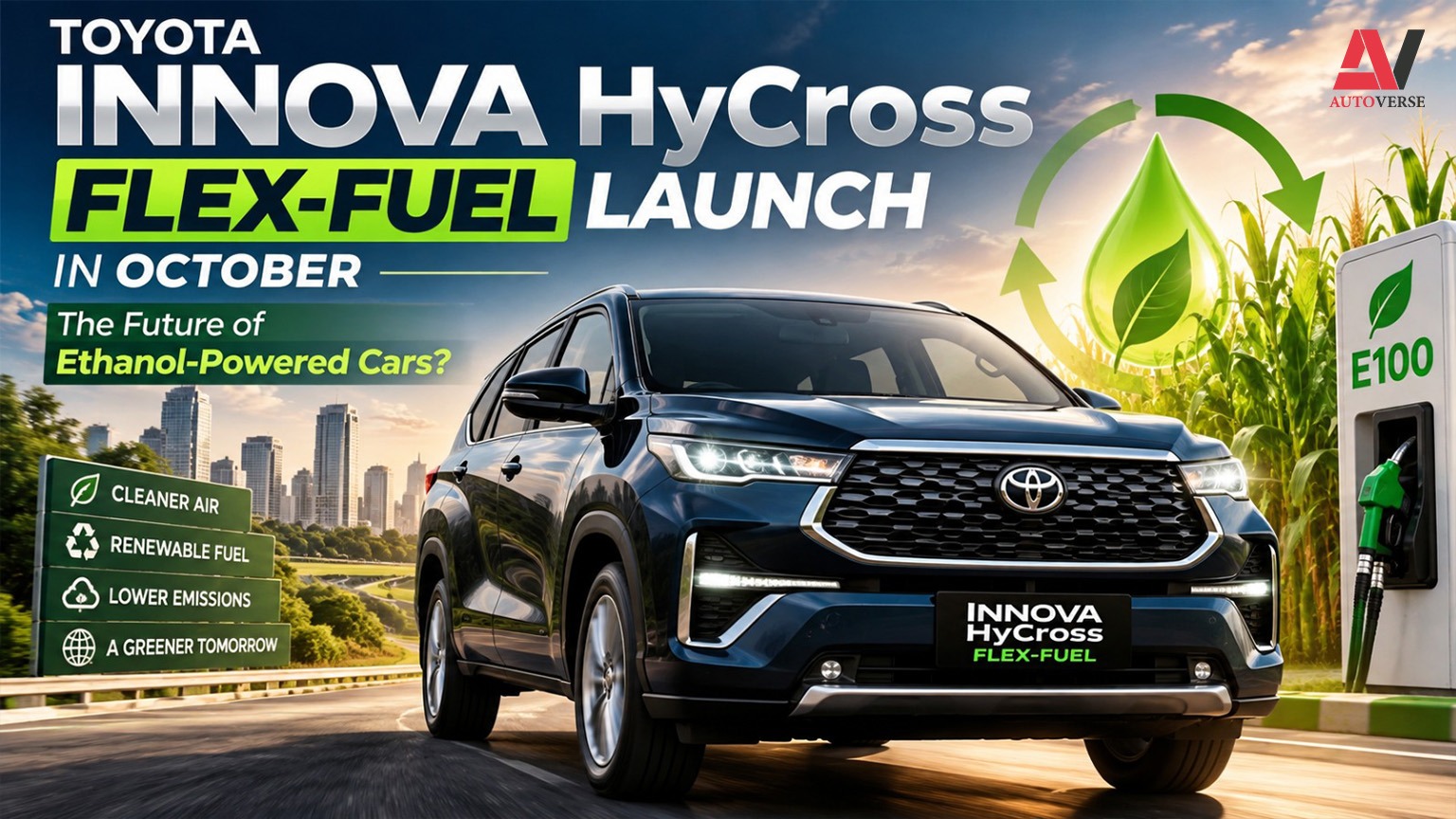
Union Road Transport and Highways Minister Nitin Gadkari has said that he has been invited to the launch of a Toyota Innova capable of running on 100% ethanol in October 2026. The proposed vehicle is expected to combine flex-fuel technology with an electrified hybrid powertrain.
However, there is an important detail that potential buyers should keep in mind: Toyota has not yet officially announced the price, booking details or a confirmed commercial launch date for the production version. The company has previously showcased an Innova HyCross-based electrified flex-fuel prototype, so the October development appears to be the next major step for technology that Toyota has been working on for several years.
So, what exactly is coming, and why does this matter to an average Indian car buyer?
From Prototype to Production?
Toyota first unveiled its Innova HyCross-based Electrified Flex Fuel Vehicle prototype in August 2023. At the time, Toyota described it as the world’s first BS6 Stage-II electrified flex-fuel vehicle prototype.
The idea was quite interesting: instead of choosing between an internal-combustion engine and an electric vehicle, Toyota combined the two technologies.
The prototype used a 2.0-litre petrol engine paired with an electric motor and was designed to work with high ethanol blends. Toyota made several modifications to the engine and fuel system, including changes to components such as the fuel pump, fuel lines, fuel filter and engine internals to make them suitable for ethanol use.
Toyota’s reasoning is straightforward. Ethanol has a lower energy density than petrol, which can affect fuel efficiency. Adding an electric powertrain can help compensate for this by allowing the vehicle to operate electrically under suitable conditions.
That makes the Innova HyCross flex-fuel concept rather different from a conventional petrol car simply adapted to accept ethanol.
What Does 100% Ethanol Actually Mean?
This is where the story gets particularly interesting.
A normal petrol vehicle cannot simply be filled with 100% ethanol. Flex-fuel vehicles require specially calibrated engines and fuel-system components designed to handle different ethanol-petrol blends.
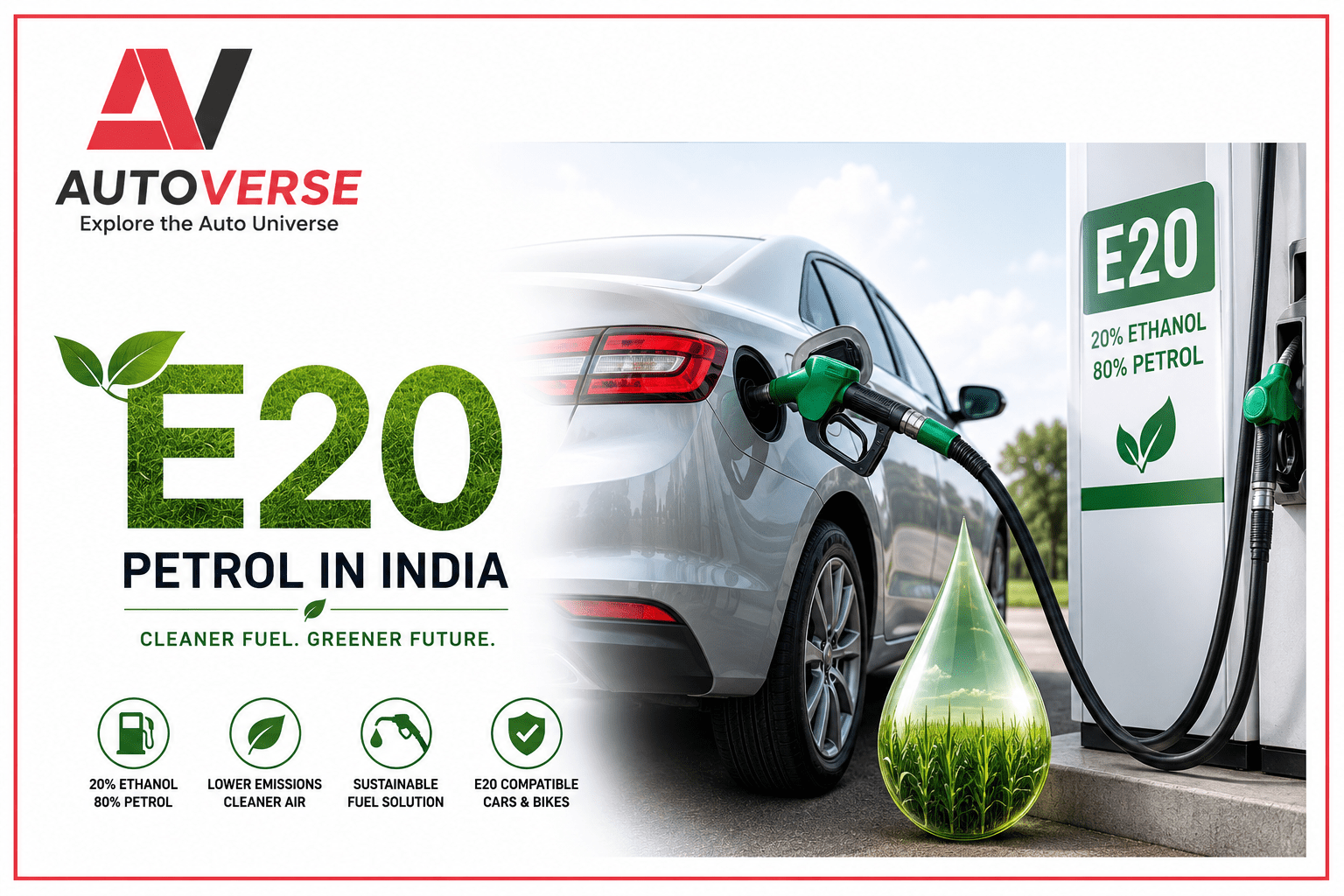
India has already moved towards higher ethanol blending in petrol, with E20 becoming an important part of the country’s fuel transition. Flex-fuel technology takes the concept considerably further, allowing compatible vehicles to use much higher ethanol concentrations, potentially up to E100. The Ministry of Petroleum and Natural Gas has described flex-fuel vehicles as capable of operating across blends ranging from E20 to E100.
Toyota’s earlier Innova prototype was specifically engineered around this concept, rather than being simply an E20-compatible vehicle.
And that distinction is important.
E20 compatibility does not mean E100 compatibility.
Existing car owners should therefore not assume that a regular petrol Innova—or any other petrol car—can run on pure ethanol. Fuel compatibility remains dependent on the vehicle’s certified specifications and manufacturer’s recommendations.
The Hybrid Advantage
The biggest talking point about the proposed Innova is not ethanol alone. It is the combination of ethanol + hybrid technology.
Toyota’s earlier prototype used the same basic 2.0-litre Atkinson-cycle petrol engine architecture as the standard Innova HyCross Hybrid, working with an electric motor. Toyota said its strong-hybrid system could operate with the petrol engine switched off for a significant portion of driving under specific test conditions.
This is where the technology starts making sense from an engineering perspective.
Ethanol can reduce dependence on fossil petrol, while the electric motor can improve overall energy utilisation and reduce the amount of fuel the engine needs to burn.
It is essentially an attempt to get two benefits from one powertrain:
- Higher substitution of petrol with ethanol
- Better efficiency through electrification
- Lower dependence on imported fossil fuels
- Reduced emissions compared with conventional fuel use
Toyota has previously explained that electrified flex-fuel technology can combine higher ethanol substitution with improved fuel efficiency compared with a conventional flex-fuel setup.
Can It Really Cost Like ₹25/Litre Petrol?
This is probably the number that will attract the most attention.
Gadkari has claimed that the running economics of the upcoming Toyota could be equivalent to petrol costing around ₹25 per litre.
But this figure needs to be understood carefully.
It is not the expected pump price of ethanol, nor is it an official Toyota claim about guaranteed running costs. It is a petrol-equivalent running-cost comparison attributed to the minister.
Actual ownership economics will depend on several factors, including ethanol prices, vehicle efficiency, driving conditions, ethanol availability and how frequently the hybrid system operates electrically.
In other words, the ₹25/litre figure makes for an interesting headline, but buyers will need real-world mileage and fuel-price data before knowing what the car will actually cost to run.
The Bigger Question: Where Will You Find E100?
For a technology like this, the fuel infrastructure could be just as important as the car itself.
Imagine buying an E100-capable Innova and then discovering that the nearest compatible ethanol pump is hundreds of kilometres away.
That is where India’s transition towards flex fuels will face its biggest practical test.
The government has been steadily expanding ethanol production and blending, while flex-fuel vehicles are beginning to enter the passenger-car market. In June 2026, Maruti Suzuki launched India’s first flex-fuel passenger vehicle, marking another important development in the move towards higher ethanol usage.
Toyota’s Innova could therefore become part of a much larger transition rather than being an isolated product.
What Could Make the Innova Flex-Fuel Special?
If the production version remains close to Toyota’s earlier prototype, buyers could get a combination that is still relatively unusual in India.
1. Strong Hybrid Technology
The hybrid system could help improve efficiency and reduce fuel consumption, particularly in city traffic.
2. High Ethanol Compatibility
The vehicle is expected to support very high ethanol blends, potentially up to E100.
3. Familiar Innova Package
Instead of introducing the technology in a small experimental hatchback, Toyota is applying it to one of India’s most recognisable family MPVs.
4. No External Charging
Unlike a full EV, the hybrid system would not require the owner to plug the vehicle into a charger.
5. Potentially Lower Fossil-Fuel Dependence
Greater use of domestically produced ethanol could reduce reliance on conventional petrol.
But There Are Still Questions
The biggest question is whether this October announcement represents a full-scale commercial launch or another stage in Toyota’s development programme.
Toyota’s own 2023 announcement said that the prototype still required further calibration, homologation and certification.
As of the latest reports, Toyota has not publicly announced the production model’s final price, variants, warranty details or retail availability.
There is also the question of fuel economy.
Ethanol contains less energy per litre than petrol, meaning an E100 vehicle may consume more litres of fuel to cover the same distance. The hybrid system is intended to offset some of this disadvantage, but actual real-world results will ultimately matter more than laboratory figures.
What It Means for Indian Car Buyers
The interesting part about the Toyota Innova HyCross Flex-Fuel is that it shows India’s automotive transition is not necessarily going to follow a single path.
Electric vehicles are growing. Hybrids are becoming more common. CNG continues to be popular. Ethanol blending is increasing. And now manufacturers are moving towards vehicles capable of using much higher ethanol concentrations.
The Innova Flex-Fuel sits somewhere in the middle of this transition.
It doesn’t ask an Indian family to give up the convenience of an internal-combustion engine. It doesn’t require charging infrastructure like a pure EV. At the same time, it attempts to significantly reduce dependence on conventional petrol.
For a country as large and diverse as India, that flexibility could be important.
AutoVerse Verdict
The Toyota Innova HyCross Flex-Fuel could become one of the most interesting developments in India’s alternative-fuel car market if Toyota moves from its long-running prototype programme to a production vehicle.
The technology itself isn’t new—the Innova-based prototype was already demonstrated in 2023. What is new is the possibility that the technology could finally move closer to the hands of everyday customers.
But the real test will begin after the launch.
Can E100 fuel become easily available? Can the vehicle deliver convincing real-world running costs? Will its price remain reasonable? And can Indian families see a genuine advantage over conventional hybrids, CNG cars and EVs?
Those answers will determine whether the Innova Flex-Fuel becomes just another interesting automotive experiment or an important step in India’s transition towards cleaner and more domestically sourced mobility.
For now, one thing is clear: the next chapter of the Innova story may not be about petrol or diesel at all. It could be about ethanol and electricity working together.
Know more about E20 Fuel.