
India’s passenger vehicle market entered the festive season on a strong note in September 2026. Carmakers increased supplies to dealerships ahead of Navratri and Diwali, while retail demand also reached a new September high.
Domestic passenger vehicle wholesale dispatches were estimated at around 4.60 lakh units in September 2026, representing growth of roughly 21–24% over the same month last year, depending on the industry dataset used. The increase was supported by festive stocking, improved affordability, lower borrowing costs and a relatively weak September 2025 base affected by the transition to GST 2.0.
But the more important number for consumers came from retail registrations. According to the Federation of Automobile Dealers Associations (FADA), 4,27,213 passenger vehicles were retailed in September 2026, up 32.10% year on year and 6.17% over August. It was the best-ever September for passenger vehicle retail in India.
So, what happened in September, which brands gained the most, and what does it tell us about the Indian car market?
September 2026 Car Sales: Key Numbers
| Metric | September 2026 |
|---|---|
| Passenger vehicle wholesale | ~4.60 lakh |
| Passenger vehicle retail | 4,27,213 |
| Retail YoY growth | +32.10% |
| Retail MoM growth | +6.17% |
| Best-selling brand | Maruti Suzuki |
| No. 2 retail brand | Mahindra |
| No. 3 retail brand | Tata Motors |
| EV retail share | 8.45% |
| Petrol/Ethanol share | 41.27% |
FADA’s retail data also shows that urban and rural passenger vehicle demand grew almost equally in September. Urban PV retail increased 32.11% year on year, while rural retail grew 32.09%. That makes the September recovery particularly interesting because growth was not limited to India’s major cities.
Maruti Suzuki Continues to Dominate
Maruti Suzuki remained India’s undisputed passenger vehicle leader in September.
The company recorded 1,81,838 domestic passenger vehicle dispatches, up around 37% from 1,32,820 units in September 2025. Utility vehicles were a major contributor, with Maruti reporting 78,911 SUV/MPV sales during the month.
The company’s overall September sales, including exports and sales to other OEMs, stood at 2,36,013 units.
Maruti’s dominance is no longer driven only by small hatchbacks. Models such as the Brezza, Fronx, Grand Vitara and Victoris have become increasingly important to its sales mix.
The recently launched Baleno facelift also adds another fresh product to the company’s portfolio as it heads into the festive season.
Tata Motors and Mahindra Fight for Second Place
The battle for the second position remains one of the most interesting developments in India’s car market.
Tata Motors recorded 68,810 domestic passenger vehicle dispatches in September, up 15.3% year on year from 59,667 units. The company’s strong SUV and EV portfolio continues to support volumes.
Mahindra, meanwhile, reported 64,092 utility vehicle sales, representing approximately 14% year-on-year growth.
However, in the retail market, Mahindra actually edged ahead of Tata in September. FADA recorded 57,343 Mahindra vehicles versus 57,254 Tata vehicles.
The difference was just 89 units.
This is a significant development because Mahindra’s SUV-focused strategy continues to pay off. The Scorpio, Thar, XUV 3XO and the company’s new electric-origin SUVs have helped the brand strengthen its position in the market.
Hyundai Posts Healthy Growth
Hyundai Motor India also had a strong September.
The company dispatched 57,166 passenger vehicles domestically, up 10.9% year on year.
The Creta continues to be one of Hyundai’s biggest volume drivers, while the Venue, Exter and other models contribute across different segments.
The company’s strong SUV portfolio is particularly important at a time when Indian consumers continue to move away from traditional hatchbacks and sedans towards compact and midsize SUVs.
The newly updated Hyundai Elevate also entered the market during this period, giving the brand another important product in the midsize SUV space.
Kia Records Its Best-Ever Monthly Sales
Kia was one of September’s biggest success stories.
The company recorded 32,017 wholesale units, representing a massive 41% year-on-year increase over the 22,700 units sold in September 2025. Kia also reported that September was its highest-ever monthly sales performance since entering India.
The Seltos and Sonet remain important volume contributors, while the Carens family and newer products are helping Kia broaden its customer base.
The company’s strong September performance shows that the Indian SUV and premium family-car market remains highly competitive even beyond the top four manufacturers.
Toyota, MG and Other Brands
Toyota recorded 25,027 domestic sales in September, with total sales including exports reaching 28,218 units. Its January-September 2026 domestic sales remained ahead of the corresponding period last year despite a softer September.
JSW MG Motor India dispatched 8,018 units, while Honda Cars India recorded 4,465 domestic sales. Renault dispatched 3,399 units, while Nissan recorded 3,300 units in domestic wholesale.
Nissan’s September number was particularly notable because it was almost double its year-ago wholesale volume.
Brand-Wise September 2026 Wholesale Sales
| Brand | September 2026 | YoY Growth |
|---|---|---|
| Maruti Suzuki | 1,81,838 | +37% |
| Tata Motors | 68,810 | +15% |
| Mahindra | 64,092 | +14% |
| Hyundai | 57,166 | +10.9% |
| Kia | 32,017 | +41% |
| Toyota | 25,027 | -7.6% |
| MG | 8,018 | +19% |
| Honda | 4,465 | -15.8% |
| Renault | 3,399 | -20.3% |
| Nissan | 3,300 | ~+100% |
Wholesale/dispatch figures; manufacturer reporting categories can differ slightly between brands.
EV Sales Continue to Rise
If there is one part of September’s sales data that deserves special attention, it is electric vehicles.
FADA’s retail data shows that EVs accounted for 8.45% of passenger vehicle registrations in September, up from 7.63% in August and 5.74% in September 2025.
Electric passenger vehicle retail sales reached 36,108 units, representing a massive 94.56% year-on-year increase. Tata Motors remained the market leader with 14,791 EV registrations, followed by Mahindra with 7,780 and JSW MG Motor with 5,242.
The arrival of new electric SUVs from Tata, Mahindra, MG and other manufacturers is clearly expanding the segment beyond small urban EVs.
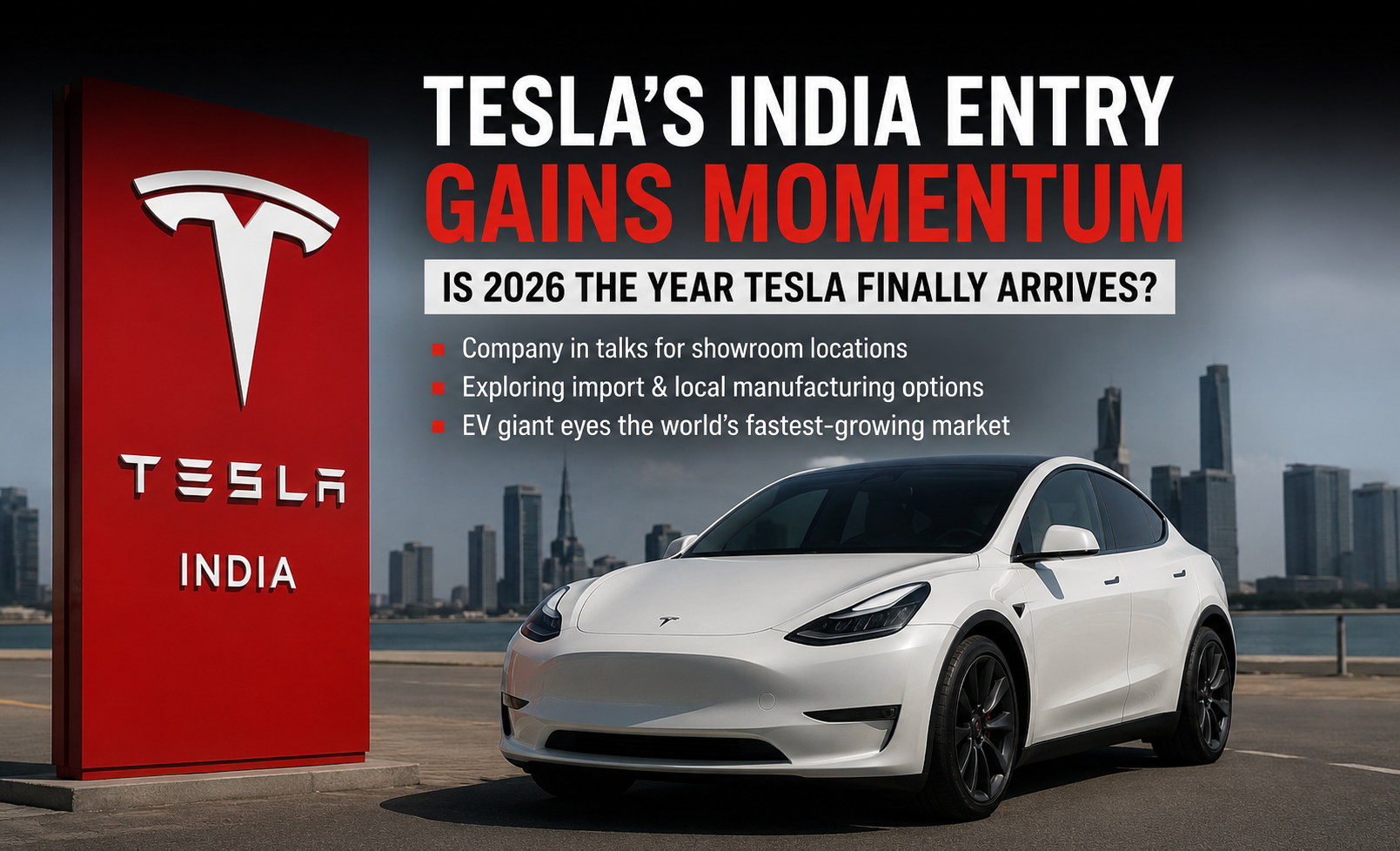
Interestingly, Tesla also recorded 291 Indian registrations in September, up sharply from the previous month, although its volumes remain small compared with mass-market EV manufacturers.
Petrol vs CNG vs Hybrid vs EV: The Gap Is Getting Smaller
August 2026 produced a major milestone when CNG, hybrid and EVs collectively overtook petrol in passenger vehicle retail share.
September brought a slight reversal.
According to FADA, petrol/ethanol vehicles accounted for 41.27% of passenger vehicle retail in September. CNG/LPG stood at 23.11%, hybrids at 9.44% and EVs at 8.45%.
Together, these alternative powertrains accounted for 41% of the market—almost exactly matching petrol.
| Powertrain | September 2026 Share |
|---|---|
| Petrol/Ethanol | 41.27% |
| CNG/LPG | 23.11% |
| Diesel | 17.74% |
| Hybrid | 9.44% |
| EV | 8.45% |
This tells us something important: India is not moving from petrol directly to EVs.
Instead, buyers are increasingly choosing between petrol, CNG, strong hybrids and EVs, depending on their budget, driving pattern and charging access.
SUVs Continue to Shape the Market
SUVs remain one of the biggest forces behind India’s changing car market.
Maruti’s utility vehicles, Mahindra’s SUV portfolio, Hyundai’s Creta and Venue, Tata’s Punch and Nexon, Toyota’s SUVs and Kia’s Seltos and Sonet continue to attract buyers.
The trend is not limited to large SUVs either.
Compact SUVs and crossovers are becoming particularly popular because they combine the higher seating position and styling buyers want with dimensions that remain manageable in crowded Indian cities.
This is also why traditional hatchbacks still sell in large numbers, but increasingly have to compete against SUV-inspired alternatives.
Why Did Car Sales Grow So Much in September?
There is no single reason behind September’s strong numbers.
Several factors came together.
First, the festive season was approaching. Carmakers increased supplies to dealerships in preparation for Navratri and Diwali.
Second, affordability improved. The impact of GST 2.0, lower borrowing costs and changes in income-tax slabs supported consumer sentiment.
Third, new models continued to arrive. Facelifts, new SUVs, EVs and updated powertrains gave buyers more choice.
And finally, September 2025 was a relatively weak comparison period because many buyers delayed purchases ahead of the GST 2.0 transition. That low base makes the year-on-year growth rate look particularly strong. FADA itself has cautioned that September’s 32% retail growth should be interpreted carefully.
What Can We Expect in October?
October could be even more important.
September was essentially the warm-up for India’s biggest car-buying period. With Navratri and Diwali falling later this year, a significant amount of festive demand is expected to shift into October and November.
Dealers are already carrying higher inventory in preparation for the festive season. FADA reported passenger vehicle inventory at around 43–45 days, well above its recommended 21-day level.
For buyers, that could mean more choice and potentially stronger discounts on selected models.
However, rising vehicle prices remain a concern. If manufacturers continue increasing prices, part of the affordability benefit created by lower taxes and financing costs could gradually disappear.
AutoVerse Take
September 2026 was a strong month for India’s car market, but the numbers tell a more interesting story than simply saying “sales are up.”
Maruti Suzuki remains miles ahead in overall volume, Mahindra has strengthened its position against Tata, Kia is enjoying a record run, and EVs are moving rapidly into the mainstream.
At the same time, the fuel mix shows that India’s transition is not going to happen overnight.
Petrol still holds the largest individual share, but CNG, hybrids and EVs together are now almost equally important.
And that may be the biggest takeaway from September.
Indian car buyers are no longer choosing between just petrol and diesel. They are choosing the powertrain that best fits their lifestyle.
With the festive season now fully underway, October and November could provide an even clearer picture of where India’s automobile market is heading next.
The competition is getting tougher. The choices are getting wider. And for car buyers, that can only be a good thing.
Check out the August Month Sales.