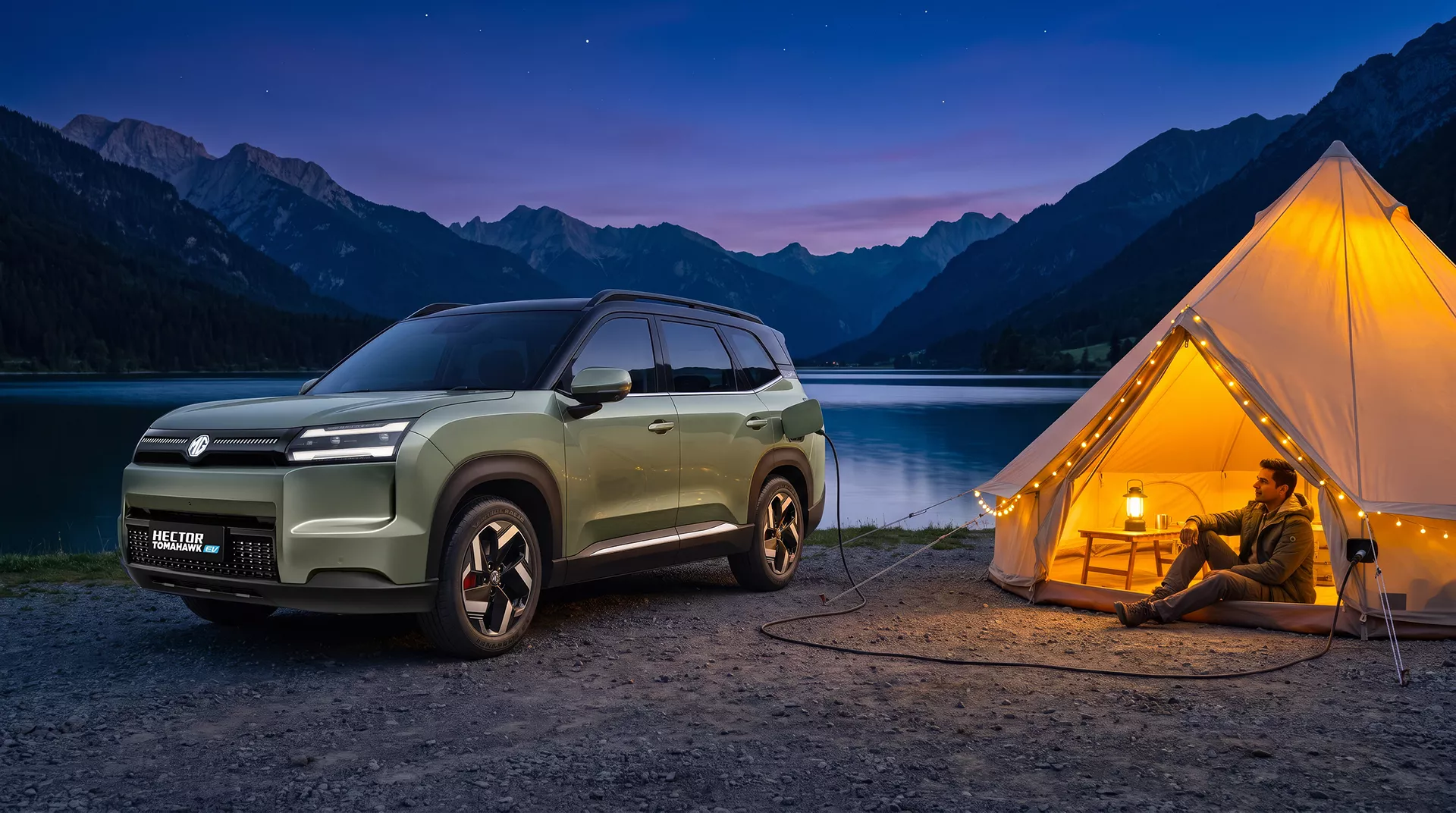
The MG Hector Tomahawk 2026 is not just another new SUV. It represents a rather different approach to family-car ownership in India.
JSW MG Motor India has introduced the Hector Tomahawk with two electrified powertrains: a fully electric version and a plug-in hybrid version. Both are based on MG’s new ADAPT platform, while the company is also offering its Battery-as-a-Service (BaaS) ownership model.
That gives buyers something unusual: the choice between going fully electric or keeping a petrol engine as a backup without moving to a conventional hybrid.
The Hector Tomahawk is also a large three-row SUV with a long list of technology, Level 2 ADAS, a large 15.6-inch touchscreen, connected-car features and a claimed electric range of up to 517 km for the EV.
But does all this make it a genuinely good family SUV, or is it simply packed with technology?
Here is our detailed MG Hector Tomahawk review.
MG Hector Tomahawk 2026: Quick Review
| Area | AutoVerse Take |
|---|---|
| Design | Modern and distinctive |
| Interior | Spacious and technology-rich |
| Seating | 5- and 7-seat EV options; 7-seat PHEV |
| EV range | Claimed up to 517 km MIDC |
| PHEV electric range | Claimed 115+ km |
| Combined PHEV range | Claimed 1,100+ km |
| Safety | 6 airbags, 360-degree camera and Level 2 ADAS |
| Technology | One of the strongest points |
| BaaS | Attractive upfront price, but requires careful cost calculation |
| Family practicality | Strong |
| Best version | Depends heavily on charging access and driving pattern |
| Overall | A compelling new-age SUV, but not for every buyer |
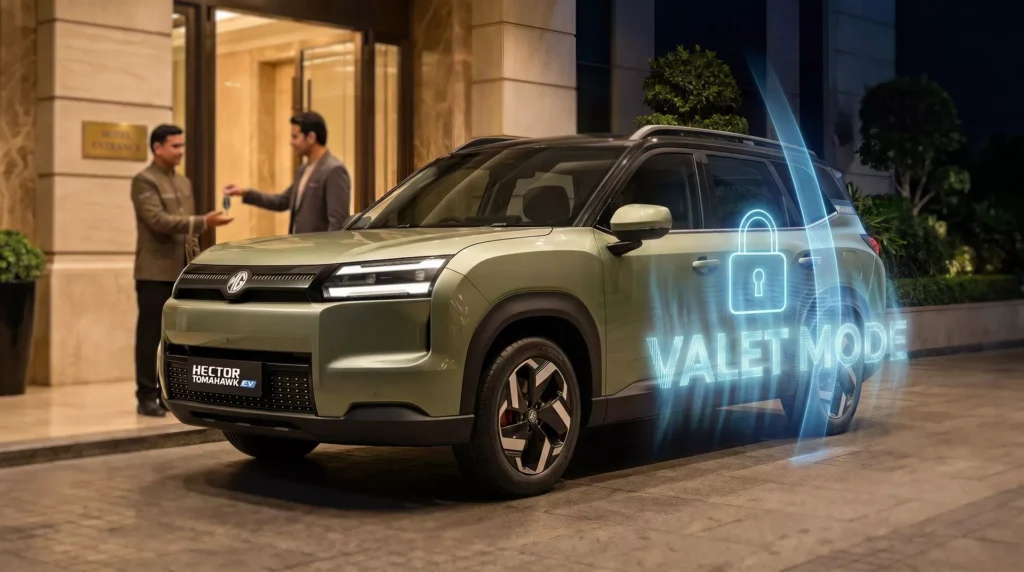
MG Hector Tomahawk Price in India 2026
The biggest talking point is not just the Hector Tomahawk’s price but the different ways in which buyers can purchase it.
The Hector Tomahawk EV starts at around ₹19.49 lakh ex-showroom without BaaS, while the BaaS introductory price starts at ₹13.99 lakh plus ₹4.90 per km battery rental.
The Hector Tomahawk PHEV starts at around ₹25.69 lakh, while its BaaS version starts at ₹21.79 lakh plus ₹3.20 per km.
These are introductory prices and the BaaS offer is subject to MG’s terms and availability. The full EV range currently extends to roughly ₹23.49 lakh, while the PHEV range goes up to around ₹27.79 lakh ex-showroom.
This is important because the ₹13.99 lakh headline price can make the Tomahawk EV look dramatically cheaper than it actually is.
BaaS: Is the Lower Price Really Cheaper?
Battery-as-a-Service reduces the upfront purchase price because the battery is not included in the vehicle’s initial price.
Instead, the buyer pays a per-kilometre battery rental.
For the Tomahawk EV, that is currently advertised at ₹4.90 per km under the introductory BaaS plan.
For the PHEV, the battery rental starts at ₹3.20 per km.
This can make sense for buyers who want to reduce their initial loan amount. However, buyers should not compare the BaaS price directly with the full-purchase price of another car.
The correct comparison should include:
- Vehicle price
- Battery rental
- Expected annual kilometres
- Electricity cost
- Petrol cost for the PHEV
- Insurance
- Financing cost
- Ownership period
- Resale value
AutoVerse tip: Calculate the total five-year ownership cost before choosing BaaS simply because the starting price looks attractive.
Design: The Hector Tomahawk Looks Different
MG has given the Tomahawk a much more futuristic identity than the traditional Hector.
The EV gets a cleaner and more closed-off front-end treatment, while the PHEV uses a more conventional grille and additional styling elements.
The SUV measures around 4,745 mm in length, with a 2,810 mm wheelbase, giving it a substantial road presence.
It is clearly designed to look like a large family SUV rather than a small urban EV.
The overall design should appeal to buyers who want something that looks modern without becoming overly experimental.
The PHEV has more conventional styling cues, which may actually appeal to buyers who are still transitioning from petrol or diesel vehicles.
Interior and Cabin Experience
The cabin is one of the strongest parts of the Hector Tomahawk.
The dashboard has a clean, modern layout dominated by a large 15.6-inch touchscreen. There is also a digital driver’s display, a panoramic sunroof and a long list of comfort and convenience features.
Depending on the variant, equipment includes features such as:
- 15.6-inch infotainment display
- Digital instrument cluster
- Ventilated front seats
- Powered seats
- Wireless charging
- Large panoramic sunroof
- 10-speaker Infinity audio system
- Powered tailgate
- Rear window sunshades
- Connected-car technology
- i-SMART 3.0
- Voice assistant
- Multiple charging and power-delivery functions
MG also says the Tomahawk gets more than 80 connected features through i-SMART 3.0.
The cabin therefore feels much more technology-focused than a conventional three-row SUV.
But There Is One Potential Problem
The heavy reliance on the touchscreen may not appeal to everyone.
A large screen looks impressive in a showroom, but frequently used functions are often easier to operate through physical controls while driving.
This is something prospective buyers should test personally during a dealership visit.
Space and Seating: Is It a Practical Family SUV?
The Hector Tomahawk is clearly designed with families in mind.
The EV is offered in both 5-seat and 7-seat configurations, while the PHEV is positioned as a three-row, seven-seat SUV.
That makes it more versatile than many electric SUVs that focus primarily on five-seat configurations.
The long wheelbase should help cabin space, while the upright SUV design gives the vehicle a substantial sense of room.
However, buyers looking at the Tomahawk as a regular seven-seater should still inspect the third row personally.
For occasional use by children or smaller adults, the third row may be adequate. But families regularly carrying seven adults should not make their decision based only on the specification sheet.
MG Hector Tomahawk EV Review: Is the EV the Better Choice?
The Hector Tomahawk EV uses a 69.2kWh battery pack and a front-mounted electric motor producing around 204hp and 310Nm.
MG claims a range of up to 517 km on the MIDC cycle.
The EV can also support 90kW DC fast charging, with MG claiming roughly 35 minutes for a 30-to-80-percent charge.
On paper, these numbers make the Tomahawk EV a strong proposition for buyers looking for a large family electric SUV.
The bigger question is not whether 517 km is possible under the official test cycle.
The real question is:
How much range will you get in your actual driving conditions?
Your speed, traffic, air-conditioning use, temperature, passenger load, tyre pressure and driving style can all affect EV range.
For a better understanding of why claimed and real-world EV range can differ, read “Real-World EV Range vs Claimed Range: Why Your Car May Show Less” article.
Who Should Choose the EV?
The Tomahawk EV makes the most sense if:
- You can charge at home.
- Most of your driving is within the city or surrounding areas.
- You regularly travel enough to benefit from EV running costs.
- You are comfortable planning longer journeys around charging.
- You want a quiet and smooth large SUV.
For such buyers, the EV should be the more logical Tomahawk.
MG Hector Tomahawk PHEV Review: The Interesting Alternative
The PHEV is arguably the more interesting version of the Hector Tomahawk.
It combines a 1.5-litre naturally aspirated petrol engine, a 20.5kWh battery and an electric motor.
MG claims more than 115 km of pure-electric range and more than 1,100 km of combined range under its stated testing/usage conditions.
The attraction is obvious.
For everyday commuting, the car can potentially operate primarily as an electric vehicle.
For longer highway journeys, the petrol engine provides additional flexibility.
This solves one of the biggest concerns some buyers have about moving to an EV: long-distance range anxiety.
But There Is a Catch
A PHEV works best when it is actually charged.
If an owner rarely plugs it in and simply drives it like a petrol car, one of the biggest advantages of the technology is lost.
Therefore, the PHEV is not automatically better than the EV.
It is better suited to buyers who:
- Have regular long-distance travel.
- Want electric driving for daily commuting.
- Have access to home charging.
- Do not want to depend entirely on public charging.
- Want a single vehicle for both city and highway use.
MG Hector Tomahawk Performance Review
Electric motors give the Tomahawk an immediate response that a conventional petrol SUV cannot easily reproduce.
The EV’s 204hp motor and 310Nm of torque should make city acceleration smooth and effortless.
The PHEV is also interesting because its electric motor provides the instant response expected from an EV while the petrol engine provides additional flexibility for longer journeys.
However, buyers should remember that this is a large family SUV.
It is not designed primarily as a sporty performance vehicle.
Its strengths are expected to be:
- Smooth acceleration
- Quiet city driving
- Easy overtaking
- Comfortable cruising
- Relaxed family travel
That is exactly where the Tomahawk’s powertrains make sense.
MG Hector Tomahawk Ride and Handling
A large SUV needs to do more than accelerate quickly.
It needs to remain comfortable with a full family onboard.
The Tomahawk’s long wheelbase and large body suggest that its character is more focused on comfort and stability than aggressive cornering.
For Indian buyers, this is probably the correct priority.
The SUV is more likely to appeal to someone looking for a comfortable highway cruiser than an enthusiast looking for sharp steering and a low driving position.
A proper extended road test will ultimately tell us more about ride quality, suspension behaviour over broken roads and high-speed stability than the specification sheet can.
Technology: One of the Tomahawk’s Biggest Strengths
Technology is clearly central to the Hector Tomahawk.
MG offers i-SMART 3.0, connected features, a large infotainment display and an AI/GenAI-powered voice assistant designed to understand more than 30 Hinglish commands.
There is also support for V2L, V2V and V2H functions, giving the vehicle capabilities beyond simply transporting passengers.
The V2H feature is particularly interesting because MG positions the Tomahawk as a potential power source for a home.
This is one area where the Tomahawk feels genuinely different from a conventional SUV.
MG Hector Tomahawk ADAS and Safety Review
Safety is another major highlight.
The Hector Tomahawk gets Level 2 ADAS, along with features such as a 360-degree camera and six airbags.
The ADAS package can assist with tasks such as maintaining a set speed, helping maintain lane position and monitoring surrounding traffic, depending on the exact system and operating conditions.
But this is an important point for buyers:
Level 2 ADAS does not make the car autonomous.
The driver remains responsible for the vehicle at all times.
For a detailed explanation of what Level 2 ADAS can actually do, its limitations and why drivers should not treat these systems as self-driving technology, read our ADAS in India 2026: What Level 2 Driver Assistance Can Actually Do—and What It Cannot guide article
Is Level 2 ADAS Really Useful in India?
It can be.
On highways, systems such as adaptive cruise control and lane-assistance technology can reduce driver workload.
They may be particularly useful during long-distance travel.
However, Indian roads can present situations involving motorcycles, pedestrians, unmarked lanes, sudden lane changes, poorly parked vehicles and unpredictable traffic.
Therefore, ADAS should be treated as a driver-assistance system, not as a substitute for attention.
This is one of the reasons we would recommend that buyers test the system themselves before purchasing.
Range: Don’t Judge the Tomahawk Only by Claimed Numbers
The 517 km claimed EV range is impressive for a large SUV.
But buyers should not assume that 517 km will be the exact real-world range in every situation.
A more useful approach is to consider your normal daily distance.
If you drive 50–60 km per day and have home charging, the Tomahawk EV could potentially make everyday charging relatively straightforward.
If you frequently drive 300–500 km between cities, charging availability and highway planning become more important.
The PHEV addresses this concern differently because it retains a petrol engine.
That makes the choice between the two versions less about which technology is “better” and more about how you use your car.
MG Hector Tomahawk vs Conventional Petrol SUV
This is where the Tomahawk becomes an interesting proposition.
A conventional petrol SUV remains simple to understand:
Fuel up, drive and repeat.
The Tomahawk asks buyers to think differently.
With the EV, you replace petrol stops with charging.
With the PHEV, you combine electric driving with petrol backup.
With BaaS, you also introduce a separate battery-rental component.
Therefore, the Tomahawk is technologically advanced, but its ownership model is also more complicated.
Some buyers will appreciate that flexibility.
Others may prefer the simplicity of a conventional petrol SUV.
MG Hector Tomahawk: Pros
What we like
- EV and PHEV powertrain choices
- 5- and 7-seat EV configurations
- Seven-seat PHEV
- Claimed 517 km EV range
- 115+ km claimed pure-electric PHEV range
- 1,100+ km claimed combined PHEV range
- Large 15.6-inch infotainment screen
- Level 2 ADAS
- Six airbags
- 360-degree camera
- Strong connected-car technology
- V2L/V2V/V2H capability
- Spacious family-oriented cabin
- BaaS lowers initial purchase price
- Lifetime battery warranty for the first owner, as announced by MG
MG Hector Tomahawk: Cons
What could concern buyers
- BaaS makes ownership calculations more complicated
- ₹13.99 lakh headline EV price does not include the battery
- Real-world range will be lower or higher depending on driving conditions
- Heavy touchscreen dependence may not suit everyone
- Large dimensions can make tight-city driving less convenient
- Seven-seat practicality needs to be judged personally
- PHEV makes most sense when regularly charged
- Long-term ownership experience is still new because the model has just launched
Which MG Hector Tomahawk Should You Buy?
Buy the Hector Tomahawk EV if:
You have home charging, primarily drive in the city, want lower day-to-day running costs and are comfortable with an EV lifestyle.
Buy the Hector Tomahawk PHEV if:
You want electric driving for everyday trips but regularly travel long distances and do not want to depend entirely on public charging.
Consider BaaS if:
Reducing your initial purchase price or loan amount is important and your annual running makes the per-kilometre battery rental financially sensible.
Avoid the Tomahawk if:
You want the simplest possible ownership experience, do not have reliable charging access or are uncomfortable with a new ownership model.
MG Hector Tomahawk vs Tata Harrier EV and Other SUVs
The Tomahawk’s biggest advantage is that it does not rely on a single electrification strategy.
The EV competes for buyers considering large electric SUVs, while the PHEV creates a different proposition altogether.
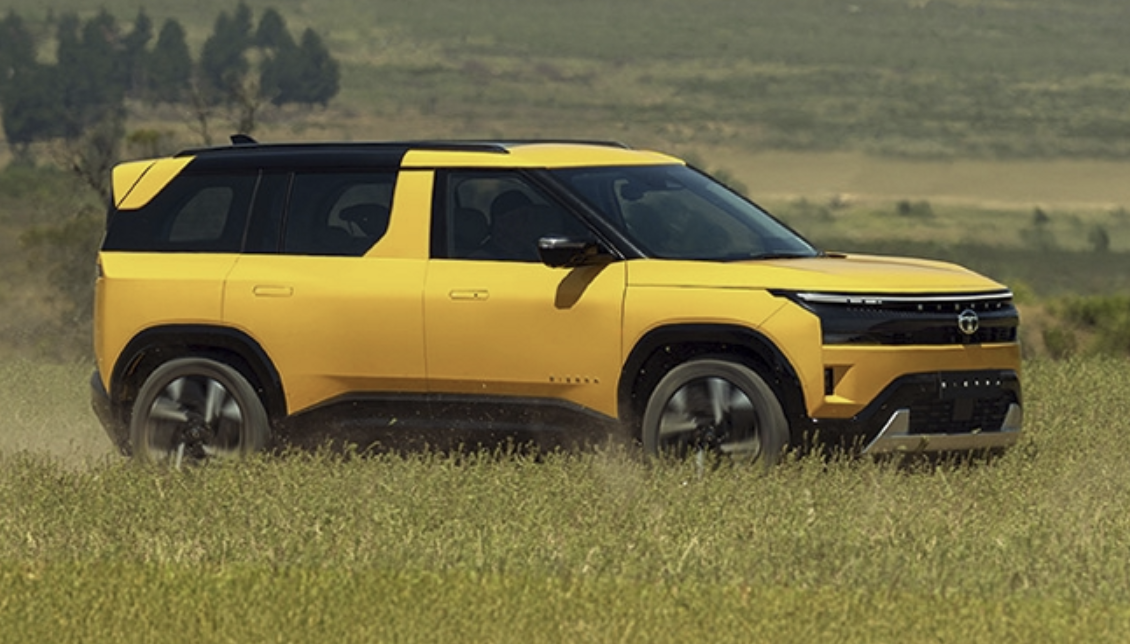
It also sits in a segment where buyers may consider models such as the Tata Harrier EV and other large family SUVs.
However, the comparison should not be based only on price.
Buyers should compare:
- Actual usable range
- Charging infrastructure
- Battery warranty
- Seating configuration
- ADAS performance
- Boot space
- Service network
- Ownership cost
- Resale expectations
- Home charging feasibility
The Tomahawk’s strongest argument is therefore not simply “more features.”
It is choice.
MG Hector Tomahawk 2026: Should You Buy It?
The answer depends heavily on your usage pattern.
If you are ready for an EV and have dependable home charging, the Hector Tomahawk EV looks like the more straightforward option.
Its combination of a large battery, three-row practicality, technology and claimed 517 km range makes it an interesting proposition for families moving into electric mobility.
The PHEV is arguably even more intriguing.
It provides electric-only driving for shorter trips while retaining petrol-powered long-distance flexibility. For a family that drives extensively across cities and still wants to experience electric driving every day, that combination could be very appealing.
But buyers should not be distracted by the lowest BaaS headline price.
The correct question is not:
“Can I buy a Hector Tomahawk for ₹13.99 lakh?”
The better question is:
“What will this car actually cost me over five years?”
That calculation can change the buying decision considerably.
Questions to Ask the MG Dealer Before Booking
Before booking the Hector Tomahawk, ask the dealer:
- What is the exact on-road price of my chosen variant?
- What is included in the BaaS plan?
- Is the battery rental fixed or subject to future changes?
- What happens if I sell the car?
- What happens to the BaaS agreement when ownership changes?
- What is the battery warranty?
- What is the expected real-world range?
- What is the charging cost for home charging?
- What is the cost of a replacement battery after the warranty period?
- Is Level 2 ADAS available on the exact variant I am booking?
- Can I test the ADAS systems on an actual road?
- How much third-row luggage space is available?
- What is the service interval?
- What is covered under the warranty?
- Is the V2H equipment included or does it require additional hardware?
These questions are more useful than simply asking for the maximum discount.
AutoVerse Verdict
The MG Hector Tomahawk 2026 is one of the more interesting new SUVs to enter the Indian market this year, mainly because MG has tried to solve the EV-versus-petrol dilemma in two different ways.
The EV offers a straightforward zero-tailpipe-emission experience with a claimed 517 km MIDC range.
The PHEV takes a more flexible approach, offering more than 115 km of claimed electric-only range while retaining a petrol engine for longer journeys.
Add Level 2 ADAS, a large technology-rich cabin, three-row practicality, V2H capability and the BaaS ownership model, and the Tomahawk is clearly more than a conventional Hector update.
But it is not automatically the right SUV for everyone.
For city-focused buyers with home charging, our pick would be the Tomahawk EV.
For frequent highway travellers who want electric commuting without giving up petrol backup, the PHEV is the more interesting choice.
And for anyone considering BaaS, do the maths before booking.
The biggest reason to consider the Hector Tomahawk is not one headline feature or one low starting price. It is the flexibility of the entire package.
AutoVerse Rating: 8.5/10
The Hector Tomahawk is ambitious, technology-loaded and genuinely different. Its biggest question is not whether the technology is impressive—it is whether the new ownership model works financially and practically for your driving pattern.
For buyers willing to understand that difference, the Hector Tomahawk could be one of the most interesting family SUVs of 2026.