The Honda Elevate facelift has finally arrived in India, bringing a sharper design, a significantly more feature-loaded cabin and some important convenience upgrades to Honda’s mid-size SUV.
Priced from ₹11.80 lakh (ex-showroom), the updated Elevate is Honda’s first major refresh of the SUV since it arrived in India in 2023. Bookings opened on October 1, and India is the first market globally to receive the updated Elevate.
But there is an interesting twist.
Honda has resisted the temptation to change the mechanical package.
The 1.5-litre naturally aspirated petrol engine continues, as do the manual and CVT gearbox options. Instead, Honda has concentrated on the areas where the original Elevate was starting to feel behind its newer rivals: styling, cabin features, comfort and technology.
So, is this enough to make the 2026 Honda Elevate a stronger contender against the Hyundai Creta, Kia Seltos, Maruti Grand Vitara and Toyota Hyryder?
Let’s take a closer look.
2026 Honda Elevate Facelift: Price
The new Honda Elevate is available in multiple variants with both manual and CVT options.
| Variant | Petrol MT | Petrol CVT |
|---|---|---|
| SV | ₹11.80 lakh | — |
| V | ₹12.29 lakh | ₹13.79 lakh |
| VX | ₹13.93 lakh | ₹15.39 lakh |
| ZX | ₹15.39 lakh | ₹16.89 lakh |
| ZX+ | ₹16.80 lakh | ₹18.30 lakh |
| ZX+ Black | ₹16.90 lakh | ₹18.40 lakh |
All prices are ex-showroom.
The entry price remains quite aggressive for the segment, while the new ZX+ Black variant pushes the top-end price to ₹18.40 lakh.
A Bolder Honda Elevate
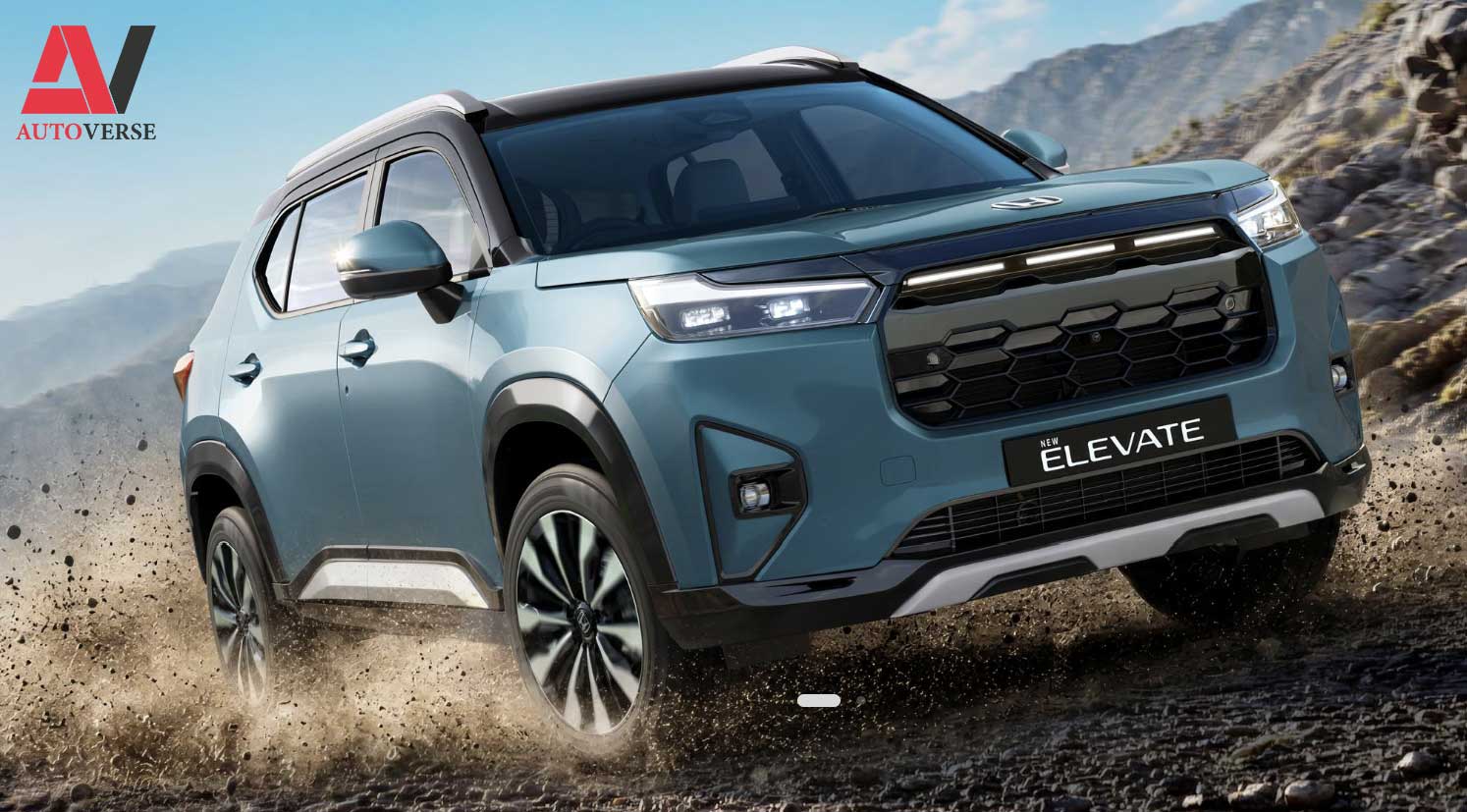
The biggest visual change is at the front.
Honda has redesigned the grille and introduced a more prominent Bold Mesh Grille, giving the SUV a wider and more upright appearance. The grille is accompanied by new tri-bar LED position lights, which give the Elevate a distinctive lighting signature.
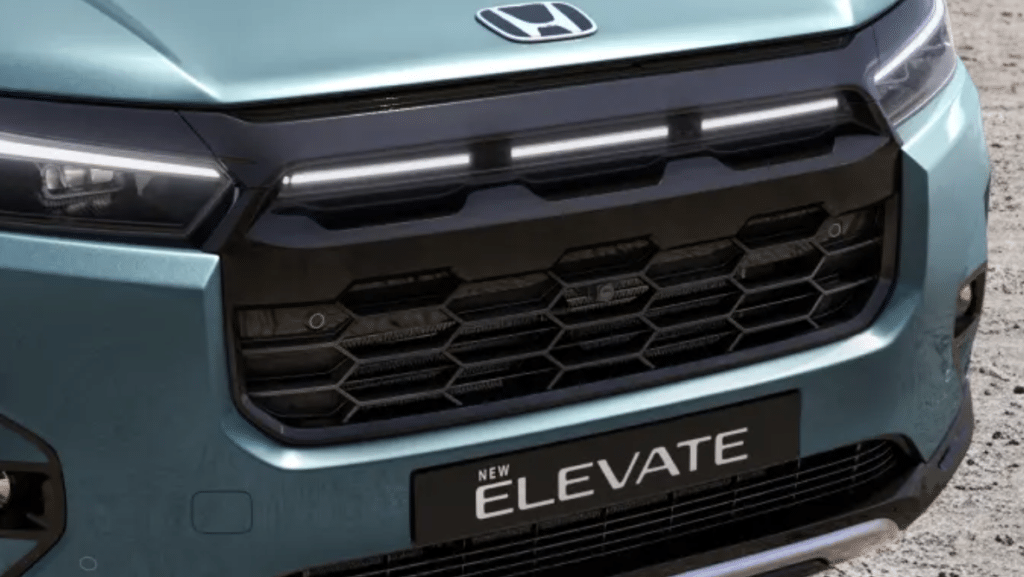
There are also gloss-black elements on the front bumper, wheel arches and other exterior areas, giving the SUV a slightly more rugged appearance.
At the rear, the biggest change is the addition of a full-width connected LED tail-lamp design.
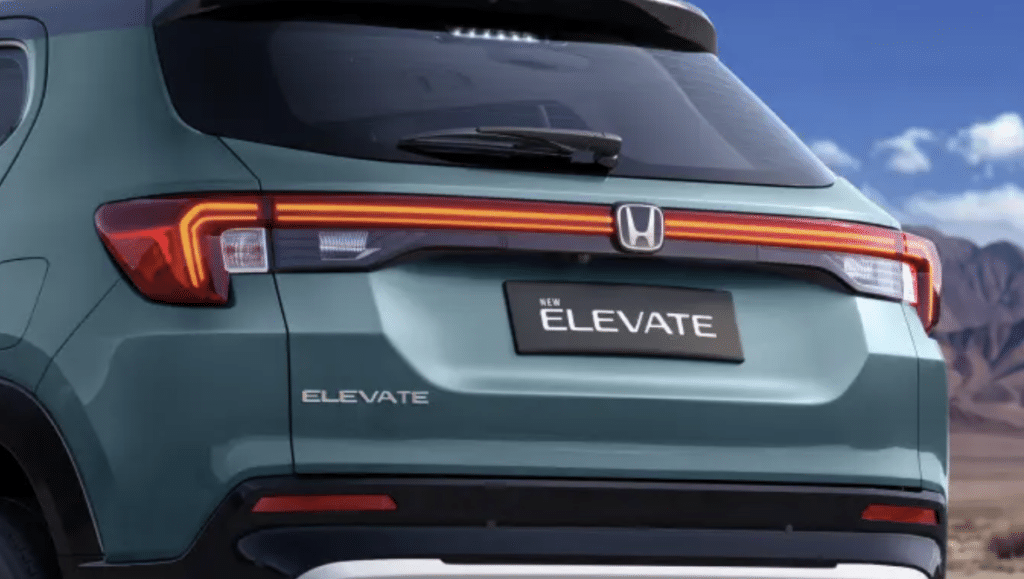
Honda has also introduced newly finished 17-inch diamond-cut alloy wheels with a dark clear finish, further adding to the SUV’s more premium appearance.
The facelift therefore doesn’t completely reinvent the Elevate.
Instead, it takes the original design—which was already quite clean and upright—and gives it a more contemporary personality.
And honestly, that approach works.
The Elevate still looks like an Elevate, but it now has more road presence.
New Nordic Forest Pearl Colour
Honda has also added a new exterior colour called Nordic Forest Pearl.
It is available as a single-tone option as well as in a dual-tone combination, with the latter paired with an Ivory-Black interior theme.
The overall colour palette now includes seven options, giving buyers more scope to personalise the SUV.
The Cabin Gets the Biggest Upgrade
If the exterior changes are evolutionary, the interior upgrades are considerably more important.
Honda has introduced a new Ivory-Black dual-tone cabin, along with soft-touch materials, gloss-black elements and premium leather upholstery on higher variants.
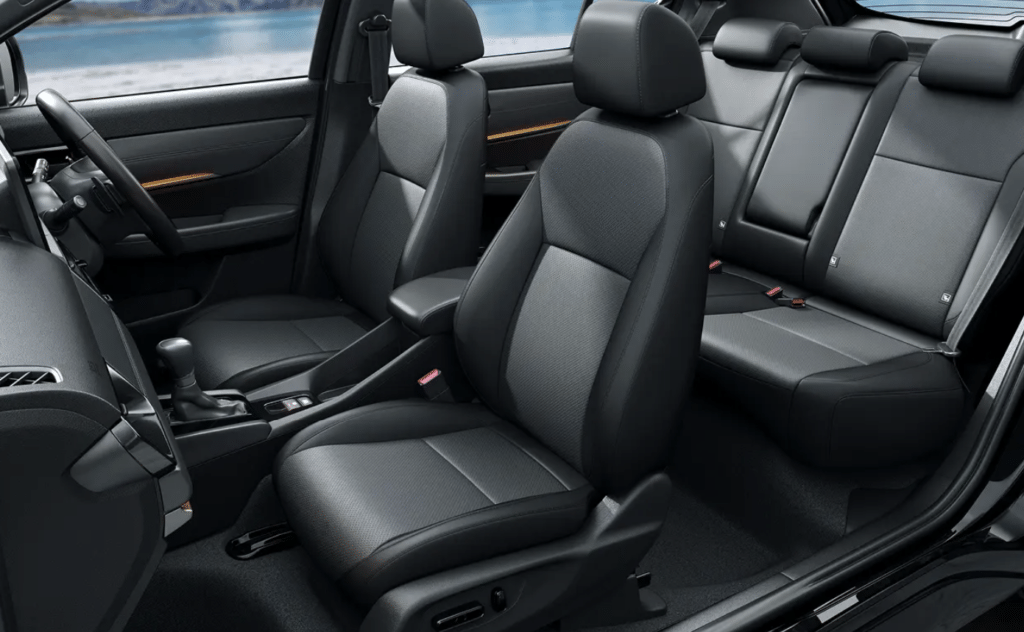
But the headline feature is something that many Elevate buyers had been asking for:
ventilated rear seats.
In fact, Honda is positioning the combination of front and rear seat ventilation as a segment-first feature.
For a country like India, this is more than a gimmick.
Rear passengers spend considerable time in traffic and hot weather, and ventilated seats can make a genuine difference to comfort.
The front seats are now power-adjustable as well, with an eight-way electrically adjustable driver’s seat and four-way powered co-driver’s seat.
Honda has also added wrap-around ambient lighting, an electrostatic-touch LED cabin light and USB-C charging ports for both front and rear passengers.
360-Degree Camera Finally Arrives
This was arguably one of the most noticeable omissions from the original Elevate.
The facelift fixes it.
The 2026 Honda Elevate now gets a 360-degree surround-view camera, allowing the driver to see the SUV from multiple angles while parking or manoeuvring through tight spaces.
Honda has also added front and rear parking sensors, an electric parking brake and Auto Brake Hold.
The addition of the 360-degree camera is particularly useful because the Elevate’s upright SUV proportions can make judging the front corners difficult in crowded urban environments.
This is one of those features that might sound minor on paper but becomes something you appreciate every day.
Existing Technology Gets Smarter
The Elevate facelift continues with Honda’s existing infotainment setup, including a 10.25-inch touchscreen, while the instrument cluster retains a 7-inch TFT display.
Wireless charging is now part of the upgraded equipment package, while the SUV also gets a PM2.5 air-quality indicator.
Honda has also made an important improvement to its ADAS package.
The company’s Honda SENSING suite now includes Low-Speed Follow on CVT versions.
This can make driving in slow-moving traffic less tiring by allowing the system to maintain a set distance from the vehicle ahead at low speeds.
The Elevate already had Level-2 ADAS technology, but the additional low-speed functionality makes the system more useful in everyday Indian traffic.
Same Engine — And That’s Not Necessarily Bad
Now comes the part that some buyers may find disappointing.
There is no hybrid, turbo-petrol or new engine.
Honda has retained its tried-and-tested 1.5-litre naturally aspirated four-cylinder i-VTEC petrol engine.
It produces around 121hp and 145Nm, with a six-speed manual and CVT automatic available.
For buyers who were hoping for a strong hybrid powertrain similar to the Grand Vitara or Hyryder, this will be a disappointment.
But there is another side to the story.
The naturally aspirated engine has a reputation for being predictable, smooth and straightforward. There is no turbocharger to worry about, and the mechanical package is already familiar.
For someone who wants a simple petrol SUV and intends to keep it for several years, that simplicity can actually be an advantage.
The downside is that Honda’s rivals now offer more variety.
The Elevate doesn’t have a factory CNG option, strong hybrid or full-electric version.
That could become increasingly important as Indian buyers become more conscious of running costs.
Honda Elevate Facelift vs Rivals
The facelift continues to compete in one of India’s toughest segments.
Its major rivals include:
- Hyundai Creta
- Kia Seltos
- Maruti Suzuki Grand Vitara
- Toyota Urban Cruiser Hyryder
- Volkswagen Taigun
- Skoda Kushaq
The Elevate’s strengths remain its spacious cabin, naturally aspirated engine, driving dynamics, ground clearance and Honda’s strong reputation for reliability.
The facelift now addresses several of the feature gaps that previously made competitors look more attractive.
However, the absence of a hybrid option remains a significant disadvantage against the Grand Vitara and Hyryder.
Is the 2026 Honda Elevate Worth Buying?
That depends on what you want from an SUV.
If your priority is features, premium cabin comfort and modern technology, the facelift is considerably more attractive than the outgoing model.
The 360-degree camera, ventilated front and rear seats, powered seats, wireless charging, additional parking sensors and improved ADAS functionality make the Elevate a much more complete package.
If your priority is fuel economy, however, the competition still has stronger cards to play.
And if you’re waiting for an Elevate hybrid, this facelift isn’t the answer.
AutoVerse Take
The 2026 Honda Elevate facelift is a classic example of Honda playing to its strengths rather than trying to completely reinvent the SUV.
The company has left the engine and basic driving character alone and concentrated on what customers can see, touch and use every day.
That was probably the right decision.
The original Elevate was never a bad SUV. Its biggest problem was that some competitors simply offered more features and more powertrain choices.
Honda has now closed part of that gap.
The 360-degree camera was overdue. The ventilated rear seats are a genuinely useful addition. The powered seats and improved cabin ambience make the SUV feel more premium, while Low-Speed Follow makes Honda’s ADAS package more useful in real-world traffic.
And then there is the price.
Starting at ₹11.80 lakh, the facelift remains accessible while the top-end version stretches to ₹18.40 lakh.
The big question is whether buyers will forgive Honda for not offering a hybrid.
For many customers, the answer could still be yes.
Because beneath the new styling and additional technology is the same straightforward Honda formula: a naturally aspirated petrol engine, comfortable cabin, strong road presence and a no-nonsense SUV character.
The Elevate may not be the most technologically ambitious SUV in its class.
But after this update, it is certainly harder to ignore.
Honda hasn’t reinvented the Elevate. It has simply fixed many of the reasons buyers were looking elsewhere.
Click here to know more about this car