Buying a compact SUV in India usually involves a familiar compromise. You want the road presence, comfort and features of an SUV, but you also want to keep your monthly fuel bills under control.
CNG cars promise lower running costs, but they have traditionally involved compromises in performance, boot space or features. Mahindra now wants to change that perception.
The company has officially opened bookings for the Mahindra XUV 3XO ZNG, the CNG-powered version of its popular compact SUV. Prices start at ₹9.99 lakh (ex-showroom), while the top variant costs ₹12.27 lakh.
The big talking points? A turbocharged petrol engine adapted for CNG, a claimed fuel efficiency of 24.7 km/kg, a twin-cylinder CNG arrangement and a feature-packed cabin.
Even more interestingly, Mahindra claims that the SUV delivers the same power and torque figures in both petrol and CNG modes.
So, is the XUV 3XO ZNG the CNG SUV that buyers have been waiting for? Let’s take a closer look.
Mahindra XUV 3XO ZNG Price and Variants
The new CNG model is available in four variants, giving buyers a choice between a more affordable entry-level option and higher trims with additional equipment.
Here is the variant-wise price list:
| Variant | Ex-showroom price |
|---|---|
| MX Edge ZNG | ₹9.99 lakh |
| REVX Edge (O) ZNG | ₹10.79 lakh |
| AX5 ZNG | ₹11.19 lakh |
| REVX A ZNG | ₹12.27 lakh |
All prices are ex-showroom and may vary if the manufacturer revises its pricing.
Bookings can be made through authorised Mahindra dealerships or the company’s official website. The booking amount is ₹21,000, according to the latest booking announcement, and customer deliveries have commenced.
The ZNG is offered alongside the petrol, diesel and electric versions of the XUV 3XO, giving buyers another powertrain option without requiring them to move to a different model.
A Turbocharged CNG Engine: The Biggest Talking Point
This is where things get interesting.
The Mahindra XUV 3XO ZNG uses a 1.2-litre, three-cylinder, turbocharged petrol engine with a factory-fitted CNG system.
Mahindra claims that the engine produces 111hp and 200Nm of torque in both petrol and CNG modes. The company has used revised turbocharger calibration, engine control unit mapping and a specialised CNG injection system to achieve this.
That is significant because many conventional CNG cars produce less power when running on gas than they do on petrol.
In everyday driving, maintaining the same claimed output in both fuel modes could mean fewer compromises when accelerating, overtaking or carrying passengers.
The six-speed manual gearbox is standard, and there is no automatic transmission option for the CNG variants at present.
Of course, the real test will be how the engine performs on actual Indian roads. Traffic conditions, passenger load, air-conditioning use and driving style can all influence the experience.
Still, the combination of turbocharging and factory-fitted CNG makes the XUV 3XO ZNG an interesting alternative to conventional naturally aspirated CNG cars.
Claimed Mileage of 24.7 km/kg
Fuel economy is likely to be one of the biggest reasons customers consider this SUV.
Mahindra claims a fuel efficiency figure of 24.7 km/kg for the XUV 3XO ZNG.
For someone travelling long distances every day, CNG can offer meaningful savings compared with petrol, depending on local fuel prices and actual mileage.
Imagine using the SUV for a daily office commute, school runs, shopping and weekend travel. Over several months, the difference in fuel expenditure could become an important part of the ownership calculation.
However, the claimed figure should not be confused with guaranteed real-world mileage. Actual efficiency will depend on traffic, road conditions, tyre pressure, driving habits and the vehicle’s load.
Prospective buyers should also consider the availability of CNG filling stations along their regular routes. A CNG vehicle is most convenient when refuelling fits naturally into your daily routine.
Twin CNG Cylinders: What About Boot Space?
One of the biggest concerns with factory-fitted CNG vehicles is luggage space.
Traditional single-cylinder installations can occupy a considerable portion of the boot, making it difficult to carry suitcases or shopping bags.
Mahindra has opted for a twin-cylinder CNG layout in the XUV 3XO ZNG. The arrangement is designed to use the available boot area more efficiently, and the SUV retains a spare wheel.
That is a useful advantage for families who want the running-cost benefits of CNG without giving up the basic practicality of a compact SUV.
However, buyers should inspect the actual boot space before making a decision, particularly if they regularly travel with large suitcases, a stroller or other bulky luggage.
The twin-cylinder setup improves packaging, but it does not mean that every aspect of luggage capacity will be identical to the petrol version.
Does the Design Change?
Not much, and that is good news for buyers who already like the XUV 3XO.
The ZNG retains the familiar exterior design of the petrol and diesel versions, including the bold front fascia, sculpted bodywork, distinctive lighting and compact SUV proportions.
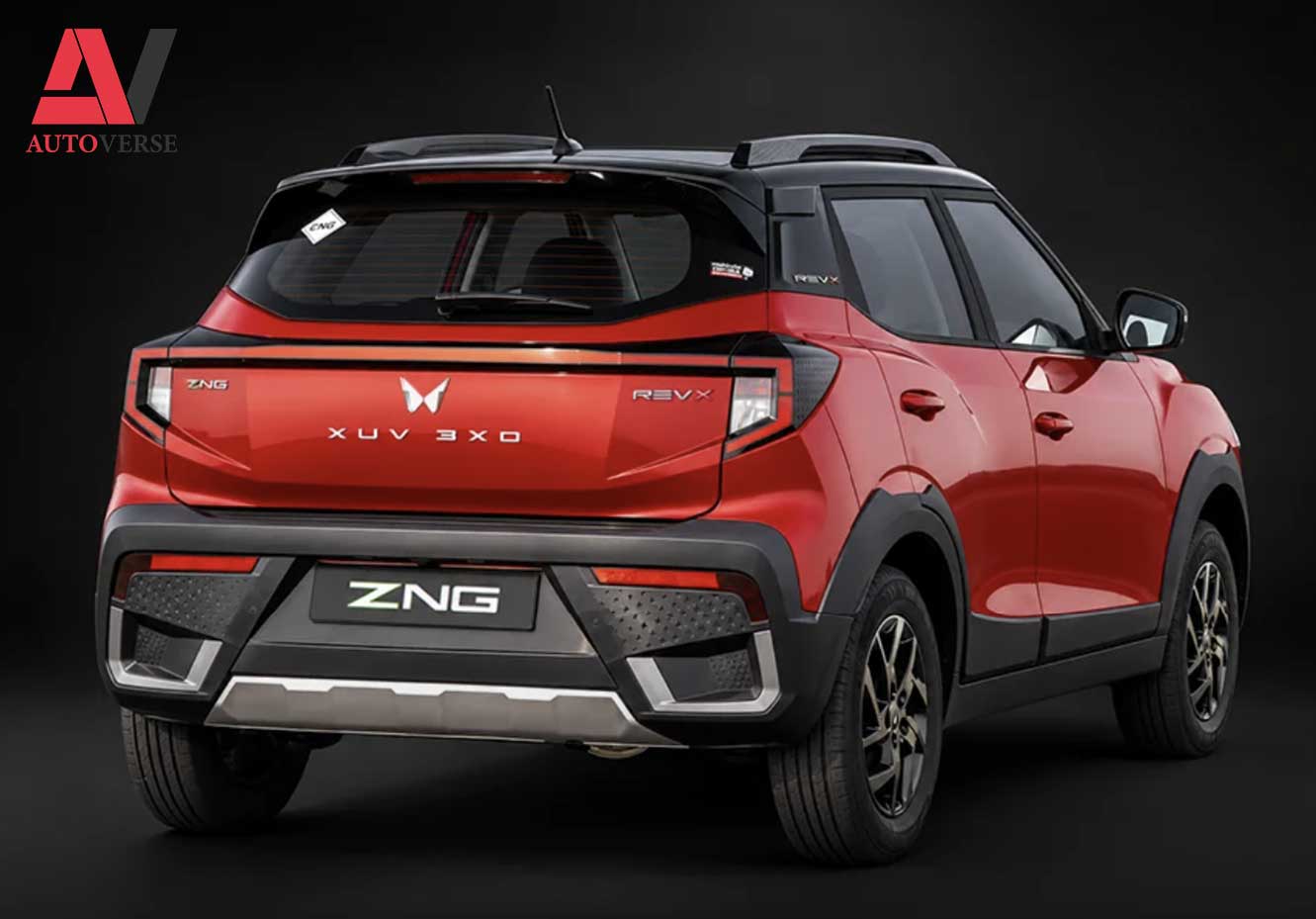
A ZNG badge on the tailgate helps distinguish the CNG model.
Inside, the cabin continues to offer a modern dashboard and a feature-rich layout. Depending on the variant, highlights include a 26.03cm HD touchscreen, rear AC vents, cruise control and a 60:40 split rear seat.
Higher variants offer additional equipment, including premium convenience and technology features.
This is important because CNG buyers no longer want a vehicle that feels like a stripped-down alternative chosen only to save money at the fuel pump.
They want the same everyday comfort and features they would expect from a petrol SUV.
Mahindra’s approach is to retain much of the XUV 3XO’s familiar appeal while adding a more economical fuel option.
Safety Has Not Been Ignored
Safety is another important part of the package.
Mahindra offers six airbags as standard across the XUV 3XO ZNG range, along with Electronic Stability Control and ISOFIX child-seat mounts.
The vehicle also incorporates gas-leak detection technology. According to Mahindra, the system can detect a CNG leak and automatically switch the vehicle to petrol mode.
That is a useful additional safeguard for a factory-fitted gas system.
The XUV 3XO’s existing platform has received a five-star Bharat NCAP rating for adult and child occupant protection. However, buyers should check the exact applicability of the rating to the CNG version and its official documentation before treating it as a separately confirmed test result.
For families, the combination of standard safety equipment and factory-integrated CNG hardware is reassuring.
Mahindra XUV 3XO ZNG vs Tata Nexon iCNG and Maruti Brezza S-CNG
The new XUV 3XO ZNG enters a competitive segment.
The Tata Nexon iCNG appeals to buyers looking for a feature-rich compact SUV with a factory-fitted CNG system. The Maruti Suzuki Brezza S-CNG, meanwhile, benefits from Maruti’s extensive service network and established CNG presence.
Mahindra’s key differentiator is its turbocharged engine and the claim of identical power and torque output in petrol and CNG modes.
The 24.7 km/kg claimed efficiency, twin-cylinder packaging and extensive standard safety equipment also strengthen its case.
But there is no single winner for every buyer.
Someone who prioritises fuel economy and service accessibility may prefer a different model, while a driver who wants stronger claimed performance alongside CNG running costs may find the XUV 3XO ZNG particularly appealing.
A proper comparison should include variant-wise prices, actual fuel economy, boot usability, maintenance costs and the availability of CNG stations near home and work.
The Auto Verse Verdict
The Mahindra XUV 3XO ZNG brings a fresh approach to the compact CNG SUV segment.
Its turbocharged engine, claimed 111hp and 200Nm output in both fuel modes, 24.7 km/kg claimed efficiency and twin-cylinder installation make it more than just another CNG variant.
It also retains the modern design, comfort features and safety equipment that have helped the XUV 3XO attract buyers.
The biggest question is whether real-world performance and fuel economy will live up to Mahindra’s claims. That is something independent road testing and long-term ownership reports will help establish.
For buyers who travel regularly and want to reduce fuel expenditure without moving away from an SUV, the ZNG deserves a place on the shortlist.
It may not be the right choice for everyone, particularly those who need an automatic gearbox or have limited access to CNG stations.
But Mahindra has made one thing clear: choosing CNG no longer has to mean choosing a basic car.
With the XUV 3XO ZNG, the company is trying to make lower running costs and everyday driving enjoyment part of the same package.
To know more about the car, click here.