The legendary Range Rover is finally going electric, and early reviews suggest that the transformation has made this luxury SUV quieter, smoother and even more capable off-road. With up to 550hp, 850Nm of torque, a 118.5kWh battery and a claimed range of 600km, the Range Rover Electric aims to prove that going electric does not mean compromising on luxury or capability. But with an expected Indian price around ₹3 crore or more, this is an EV designed for a very exclusive audience.
For decades, the Range Rover has represented a particular kind of luxury: a commanding road presence, a beautifully appointed cabin, exceptional comfort and the ability to venture far beyond the tarmac.
Now, Jaguar Land Rover (JLR) is bringing that familiar formula into the electric age.
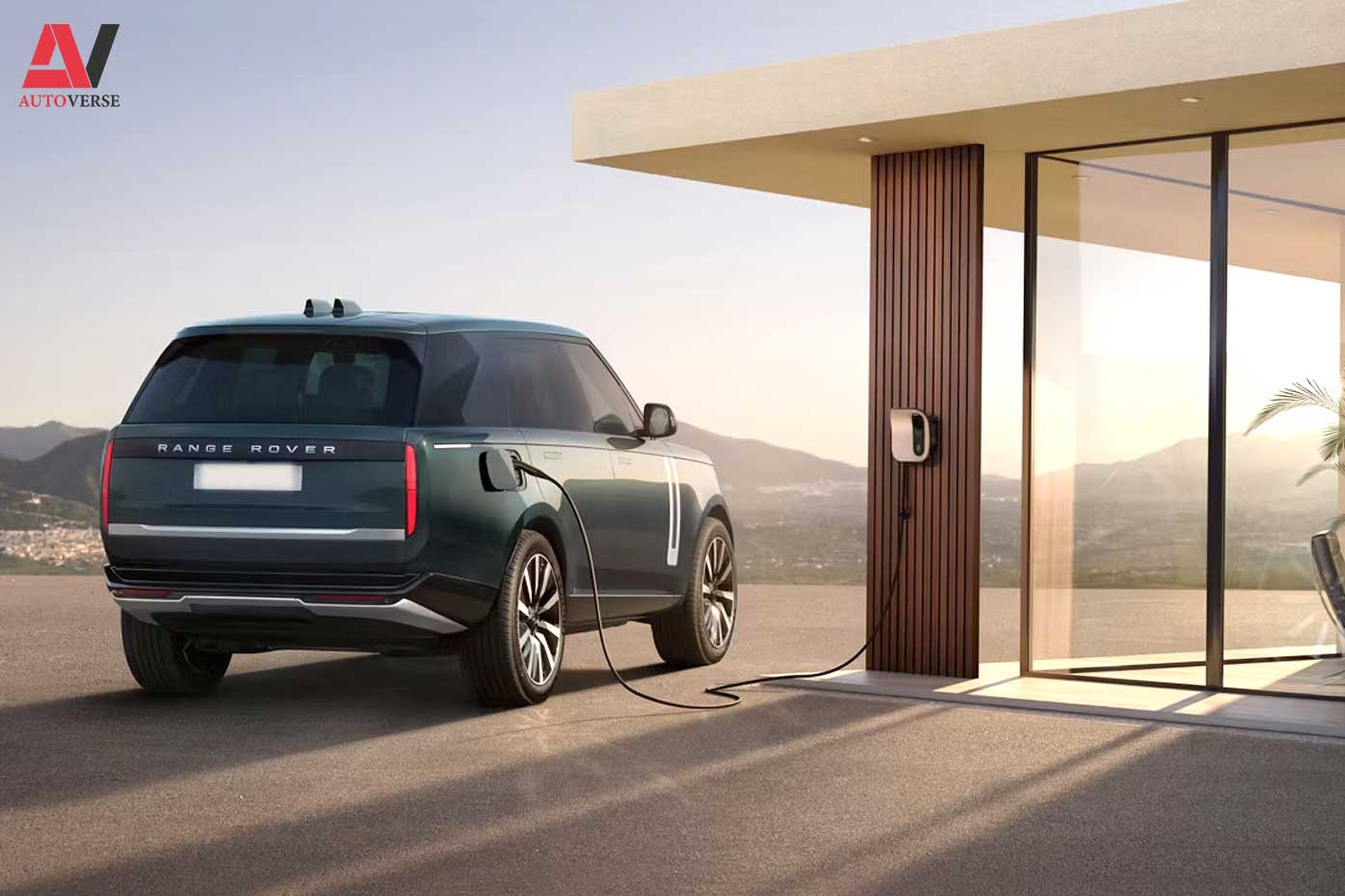
The Range Rover Electric retains the unmistakable silhouette of its petrol and diesel siblings while replacing the conventional powertrain with two electric motors and a large battery pack.
And according to recent international reviews, the result is more than simply a quieter Range Rover. The instant torque of electric motors, improved body control and sophisticated traction management appear to enhance qualities that already define the SUV.
The first production-model reviews were published in October 2026, following international media drives. The electric SUV is also planned for India, where bookings have opened, although final Indian pricing and the exact delivery schedule remain to be confirmed.
So, does the all-electric Range Rover live up to the badge? Here is what the early reviews reveal.
Range Rover Electric: Key Specifications
| Specification | Range Rover Electric |
|---|---|
| Powertrain | Dual electric motors |
| Maximum power | Up to 550hp |
| Maximum torque | 850Nm |
| Battery capacity | 118.5kWh |
| Claimed range | Up to 600km (WLTP) |
| 0–100km/h | Around 4.5 seconds |
| Electrical architecture | 800V |
| Maximum DC charging | Up to 350kW |
| 10–80% charging time | Around 22 minutes |
| Maximum water-wading depth | 900mm |
| India arrival | Expected in the second half of 2027 |
| Expected Indian price | Around ₹3 crore; not officially announced |
Figures are based on published specifications and early reviews. Actual range and charging performance depend on conditions, equipment and charging infrastructure.
Familiar Range Rover Design, Now With an Electric Heart
One of the most interesting decisions JLR has made is to avoid giving the electric Range Rover a radically different appearance.
At first glance, it looks much like the conventional Range Rover. The upright stance, clean body surfaces, distinctive lighting and imposing proportions remain familiar.
There are subtle changes to accommodate the electric powertrain, including revised front-end detailing and aerodynamic adjustments. However, the overall design philosophy remains unchanged.
That is deliberate.
JLR wants customers to see electric power as another choice within the Range Rover family rather than a completely different type of vehicle.
The SUV is based on the brand’s MLA-Flex architecture, which supports different powertrains. This allows the electric version to retain the design and much of the packaging of its combustion-engine counterparts.
For traditional Range Rover buyers, this approach makes sense. The vehicle’s identity is built around its presence, comfort and versatility, not the sound of an engine.
550hp and 850Nm: Effortless Electric Performance
The Range Rover Electric uses two permanent-magnet electric motors, one on each axle, providing all-wheel drive.
The higher-output version develops up to 550hp and 850Nm of torque. JLR has also outlined a 450hp version.
The headline figures are impressive, but the way the power is delivered is arguably more important.
In its review published on October 24, 2026, Autocar India praised the smooth, progressive power delivery. Rather than delivering an abrupt burst of acceleration, the SUV builds speed with a measured, effortless character.
The 550hp version can accelerate from 0 to 100km/h in approximately 4.5 seconds.
That is remarkable for a large luxury SUV, but the driving experience is not intended to feel aggressive all the time. The electric powertrain provides immediate response when needed while keeping everyday driving relaxed.
This is precisely where electric power suits the Range Rover. Quiet acceleration and the absence of conventional gear changes make the SUV feel even more refined.
Ride Comfort Is One of Its Biggest Strengths
Luxury SUVs are expected to isolate occupants from rough roads, and early reviews suggest that the electric Range Rover performs exceptionally well in this area.
The SUV uses twin-chamber air suspension and twin-valve dampers to control body movements while maintaining a plush ride.
The battery’s low placement also lowers the vehicle’s centre of gravity compared with the combustion-powered versions. This helps reduce body roll and improve stability.
During testing on Scottish roads, Autocar India found the ride comfortable even over broken surfaces and rough off-road sections.
Auto Express and Top Gear similarly praised the electric model’s refinement, effortless performance and comfort.
The cabin benefits from the quieter powertrain, while active noise-cancellation technology helps reduce unwanted road and wind noise.
In a vehicle designed around chauffeur-driven comfort as much as owner-driven convenience, these improvements matter more than outright acceleration figures.
The electric Range Rover is not trying to turn into a sports SUV. It is trying to make the luxury experience more relaxing.
Can an Electric Range Rover Still Go Off-Road?
This is perhaps the most important question surrounding the new model.
Range Rover has built its reputation on combining premium comfort with genuine off-road ability. A large battery and electric motors are useful only if the vehicle can retain that capability.
Early reviews suggest that JLR has managed this transition impressively.
The dual-motor all-wheel-drive system can control torque delivery electronically, helping the SUV respond quickly when individual wheels encounter different levels of grip.
JLR says its traction-control system can react to changing conditions in as little as 50 milliseconds.
Unlike a conventional combustion-powered off-roader, the electric version does not require a traditional low-range gearbox to deliver strong low-speed torque. The motors can provide controlled power from very low speeds, which is useful when climbing steep slopes or negotiating slippery terrain.
The SUV also retains a claimed maximum water-wading depth of 900mm, matching the combustion-powered version.
During international testing, reviewers drove it across muddy tracks, rocky surfaces and streams. The vehicle reportedly maintained progress with impressive composure.
There is, however, one important consideration: off-road driving can consume substantial battery energy. Drivers heading into remote areas will need to plan their return journey and charging stops carefully.
Battery, Range and Charging: Is 600km Enough?
The Range Rover Electric uses a substantial 118.5kWh lithium-ion battery and an 800V electrical architecture.
JLR claims a maximum WLTP range of up to 600km.
That is a useful figure for a large luxury SUV, although real-world driving will naturally produce different results.
In its first drive, Autocar India estimated that owners could expect approximately 450–500km in real-world conditions. Motorway speeds, cold weather, heavy loads and demanding off-road use can reduce that distance.
Charging is another highlight.
The SUV supports DC fast charging at up to 350kW, with a claimed 10–80% charging time of around 22 minutes under suitable conditions.
That could make longer journeys considerably easier, provided the vehicle has access to a compatible high-power charger.
However, maximum charging speed is not guaranteed at every charging station. Actual performance depends on the charger, battery temperature, state of charge and other conditions.
For Indian buyers, the availability of reliable high-power charging infrastructure will be particularly important, especially for long-distance travel.
Home charging could make everyday use more convenient, but customers without dedicated parking or charging access may find ownership more complicated.
Inside the Cabin: Luxury Comes First
The electric Range Rover retains the familiar cabin layout of the conventional model.
Rather than filling the dashboard with new displays and futuristic design elements, JLR has kept the overall presentation understated.
The cabin combines premium materials, powered seating, a large central touchscreen and a digital instrument display.
Depending on the configuration, occupants can benefit from heated, ventilated and massage-equipped seats. The long-wheelbase version is expected to be particularly appealing to customers who prioritise rear-seat comfort.
The battery packaging has also been designed to avoid significantly compromising cabin space.
This matters because the Range Rover Electric is expected to serve both owner-drivers and chauffeur-driven customers.
One drawback highlighted by reviewers is the reliance on touchscreen controls for several functions. Buyers who prefer physical buttons for frequently used settings may need time to adjust.
Nevertheless, the overall cabin experience remains one of the vehicle’s strongest selling points.
Range Rover Electric India Launch and Expected Price
Indian customers will have to wait a little longer to get behind the wheel.
JLR has opened bookings for the Range Rover Electric in India, with a reported token amount of ₹10 lakh. However, an official Indian ex-showroom price has not yet been announced.
According to Autocar India‘s October 2026 report, the electric Range Rover is expected to arrive in India in the second half of 2027.
It will initially come as a completely built unit (CBU) imported from the United Kingdom.
Because the electric model will be imported rather than locally assembled, its price is expected to be substantially higher than that of the locally assembled combustion-powered Range Rover. Current estimates place the starting price around ₹3 crore, although the final figure could vary by variant and equipment.
JLR plans to assess customer response before deciding whether local assembly makes commercial sense.
For buyers considering a reservation, it is worth confirming the latest booking terms, refund conditions, expected delivery timeline and final variant details directly with the company.
The Auto Verse Verdict: Is the Range Rover Electric Worth the Wait?
The Range Rover Electric makes a convincing case for electric power in the luxury SUV segment.
It retains the styling, cabin quality and off-road credentials that define the Range Rover name, while adding quieter operation, smooth acceleration and potentially lower running costs.
The biggest strengths identified in early reviews are its exceptional ride comfort, refined power delivery and impressive off-road performance.
The compromises are equally clear. Its expected price puts it firmly in the ultra-luxury category, and the real-world range may require careful planning on long journeys or demanding off-road trips. Charging access will also play an important role in the ownership experience.
For someone seeking an electric SUV primarily for city commuting, the Range Rover Electric may be far more vehicle than necessary. But for buyers who want a flagship luxury SUV without giving up the convenience of electric driving, it could be a compelling proposition.
The Range Rover Electric does not try to reinvent the Range Rover. It tries to make the original idea quieter, smoother and more sophisticated. And based on the first reviews, that approach appears to be working.