Tesla has finally unveiled its redesigned next-generation Roadster, featuring rocket-inspired thrusters, breathtaking performance claims and technology developed with SpaceX. But after years of delays, can Elon Musk turn this futuristic vision into a production-ready car?
What if your next electric car could do more than accelerate from 0 to 100 km/h in the blink of an eye? What if it could lift off the ground, perform a mid-air manoeuvre and land back on its wheels?
Sounds like something straight out of a science-fiction movie, right?
Well, Tesla wants to bring that idea closer to reality.
The American electric vehicle manufacturer has unveiled its redesigned, next-generation Tesla Roadster, showcasing an experimental propulsion system developed in collaboration with SpaceX. During a demonstration in Texas on October 15, 2026, the electric sports car performed dramatic manoeuvres using rocket-inspired thrusters, grabbing attention across the automotive world.
The company is targeting production in 2028, nearly nine years after the second-generation Roadster was first revealed in 2017.
However, there is an important distinction: the vehicle shown is a pre-production prototype, and its extraordinary performance claims have yet to be independently verified.
Tesla Roadster: What Makes It So Special?
The new Roadster is not simply another high-performance electric car competing with established supercar manufacturers. Tesla is attempting to combine electric performance with technology inspired by the aerospace industry.
The biggest talking point is the proposed SpaceX-inspired cold-gas thruster system.
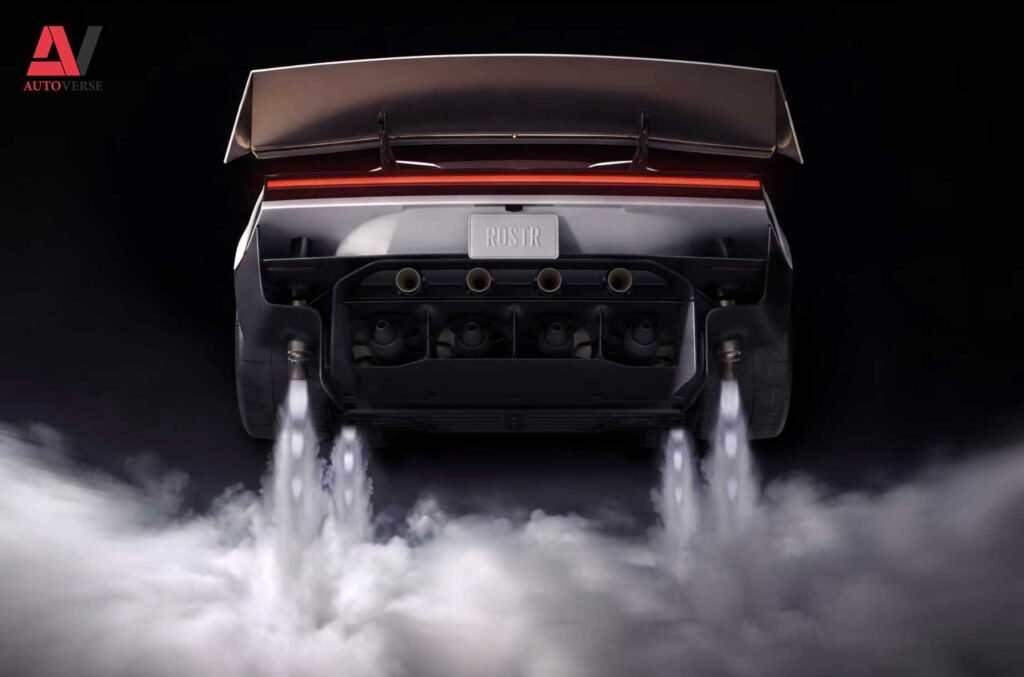
During the Texas demonstration, the vehicle used a combination of suction technology and thrusters to climb an inverted ramp, turn in the air and return to the ground. It was also shown lifting over a line of Tesla vehicles.
According to Tesla engineering vice-president Lars Moravy, the system uses 10 thrusters connected to approximately 600 litres of compressed air.
The idea is to use controlled bursts of pressurised gas to generate additional thrust and help the vehicle perform manoeuvres that would be impossible for an ordinary road car.
It is certainly an ambitious engineering experiment. However, the aerial demonstrations should not be mistaken for evidence that the Roadster will function as a conventional flying car on public roads.
The final production vehicle, its operating limitations and the legality of these features still need to be established.
Performance Figures That Sound Almost Unreal
Tesla has made some extraordinary performance claims for the upcoming Roadster.
According to the figures presented around the unveiling, the car is expected to accelerate from 0 to 60 mph (approximately 97 km/h) in less than one second in its most extreme configuration.
Tesla has also indicated a top speed exceeding 230 mph (approximately 370 km/h) and a driving range of more than 300 miles (around 483 km).
If these figures are achieved in a production vehicle, the Roadster would occupy an extraordinary position in the electric performance-car segment.
But there is a difference between a manufacturer’s claim and an independently verified result. Acceleration, range and top speed will need to be tested under controlled conditions before buyers can judge how closely the production model matches the promises.
For now, these numbers are best viewed as targets rather than proven real-world performance.
Three Versions: Performance, Thrust and Rocket
Tesla has outlined three configurations for the new Roadster, each aimed at a different level of performance.
1. Roadster Performance
The Performance version is positioned as the road-oriented model. It is expected to feature active aerodynamics and a multi-mode suction system designed to enhance performance on the road and track.
2. Roadster Thrust
The Thrust version moves further towards extreme performance. Tesla describes it as race-ready, with rear-mounted cold-gas thrusters intended to support sub-one-second acceleration from 0 to 60 mph.
3. Roadster Rocket
This is the most unusual configuration. Designed around the thruster technology, the Rocket version is presented as a single-seat vehicle with 10 cold-gas thrusters positioned around the car.
Tesla describes this version as intended for specialised use rather than ordinary public-road driving. The company has indicated that it will be available by invitation, and its advertised aerial capabilities are not approved for public-road use.
The distinction between the three versions is important because the most spectacular features may not be available in a conventional, road-legal configuration.
A Design Inspired by Aircraft
The new Roadster also receives a dramatic redesign.
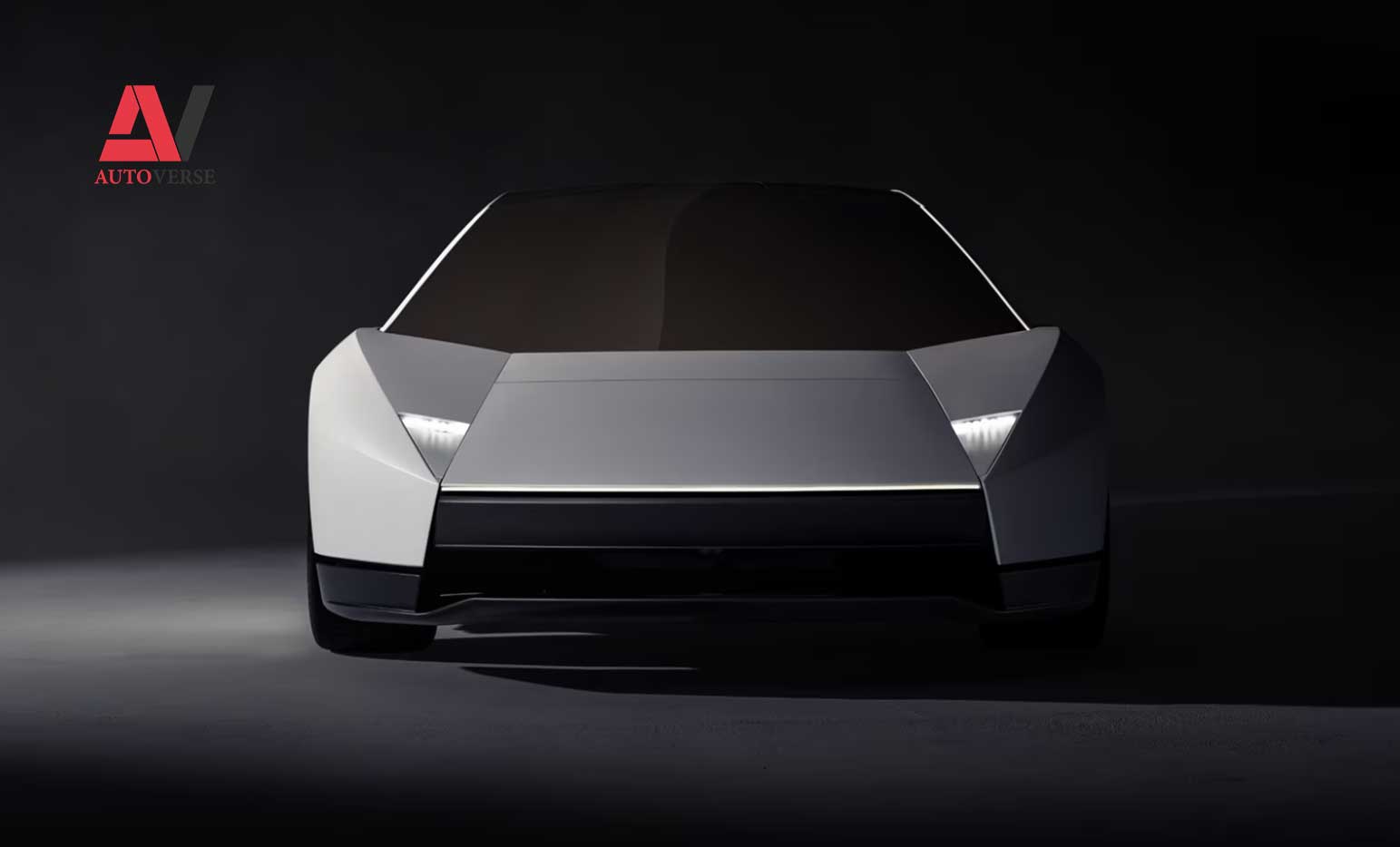
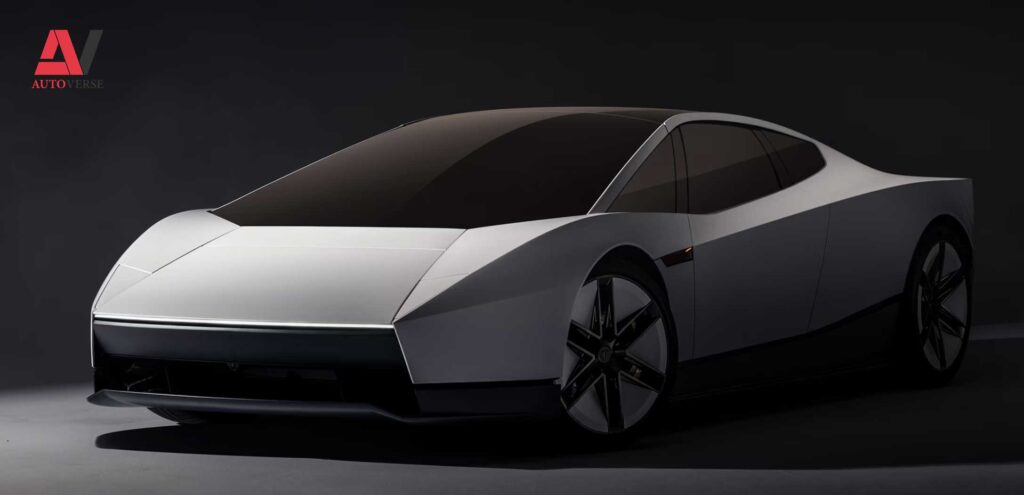
The prototype showcased in Texas has a sharp, angular appearance, with proportions that make it look closer to an exotic supercar than a traditional electric sports car.
Tesla says its evolving design language draws inspiration from aircraft such as the SR-71 reconnaissance aircraft and the F-35 fighter jet.
The focus is on aerodynamic efficiency, performance and a futuristic appearance.
Unlike the more conventional styling of the original second-generation concept shown in 2017, the redesigned model looks more aggressive and visually distinctive.
However, Tesla has not yet provided a complete production specification covering every exterior detail, interior feature or equipment level.
For a car expected to operate at extremely high speeds, aerodynamic performance will be just as important as its dramatic styling.
The Roadster Has Been a Long Time Coming
One of the biggest questions surrounding the new Roadster is not about its technology. It is about timing.
Tesla first unveiled the second-generation Roadster in 2017, promising performance that would challenge some of the world’s most celebrated supercars. Deliveries were initially expected much earlier, but the programme experienced repeated delays.
Over the years, Tesla prioritised other projects, including the Model 3, Model Y and Cybertruck, while the Roadster remained on the sidelines.
Now, the company has demonstrated a redesigned prototype and set another target: production in 2028.
That is encouraging, but it is not the same as confirming that customer deliveries will begin on schedule.
Tesla still needs to finalise the engineering, validate performance and safety, establish manufacturing processes and clarify which experimental technologies will make it into production.
For customers who have followed the Roadster since its original unveiling, the next milestone will be a finished car—not another spectacular demonstration.
What About the Price?
Tesla has not announced a final retail price for the redesigned Roadster.
The company has indicated substantial reservation amounts for certain configurations, including $50,000 for the Performance version and $250,000 for the Thrust version, while the Rocket configuration is described as invite-only.
These are reservation amounts, not confirmed final vehicle prices.
The absence of a final price makes it difficult to assess how the Roadster will compare with other electric supercars and high-performance luxury vehicles.
There is also no confirmed Indian launch date or India-specific pricing at this stage.
Given the car’s specialised technology, performance ambitions and likely premium positioning, Indian buyers should wait for official announcements rather than rely on speculative prices.
Can the Roadster Change the Future of Electric Cars?
The Roadster is unlikely to become a mass-market vehicle. Its purpose is different.
It is a technology showcase designed to demonstrate what Tesla believes can be achieved when electric powertrain engineering meets aerospace innovation.
The wider automotive industry is already using electric motors, advanced battery management, torque control and active aerodynamics to improve performance. Tesla’s thruster experiment takes that philosophy into much more unusual territory.
However, the real challenge is making such technology reliable, safe, affordable to maintain and suitable for its intended use.
A system that works during a controlled demonstration must also withstand repeated operation, environmental conditions and the demands of everyday ownership if it is to become a viable product.
And that is where the Roadster’s biggest test lies.
The Auto Verse Verdict
The redesigned Tesla Roadster is easily one of the most unusual performance-car projects to watch as it moves towards its planned 2028 production target.
Its SpaceX-inspired thrusters, extreme acceleration claims and dramatic demonstrations have given the electric supercar a level of attention few vehicles can match.
But excitement should be balanced with patience.
The Roadster is still a pre-production project, its headline performance figures need independent verification, and its most radical features raise important questions about safety, regulation and real-world usability.
For now, the Roadster represents a bold vision of what an electric supercar could become—not a finished product ready for customers.
If Tesla can turn the prototype into a reliable production vehicle while delivering even a substantial part of its promised performance, the Roadster could become a landmark in electric performance engineering.
Until then, one question remains: will 2028 finally be the year the Roadster reaches customers, or will the world have to wait a little longer?