Honda has given the Elevate its first major update since its 2023 debut, adding a sharper design, ventilated rear seats, a 360-degree camera and a more premium cabin. But with the same petrol engine and a fiercely competitive SUV segment, does the facelift make the Elevate a stronger all-round package?
The midsize SUV market in India is no longer a place where a good engine, spacious cabin and a trusted badge are enough to guarantee success. Buyers increasingly expect premium interiors, connected technology, multiple powertrain choices and features that make everyday driving more comfortable.
Honda’s Elevate has always had a slightly different approach. Rather than chasing every trend, it has focused on practicality, a naturally aspirated petrol engine, good ground clearance and a straightforward ownership proposition.
Now, the 2026 Honda Elevate facelift attempts to bridge the gap between those solid fundamentals and the feature-rich offerings from its rivals. Launched at an introductory price of ₹11.80 lakh (ex-showroom), the updated SUV brings meaningful additions to the cabin and safety equipment while retaining its familiar mechanical package.
After reviewing the road-test findings and the latest launch details, one thing becomes clear: the facelift makes the Elevate more appealing, but it does not completely change its personality.
A Sharper Face Without Losing Its Identity
Honda has kept the overall shape of the Elevate largely unchanged, and that is not necessarily a bad thing. Its upright proportions, squared-off stance and relatively clean bodywork have always given it a proper SUV appearance.
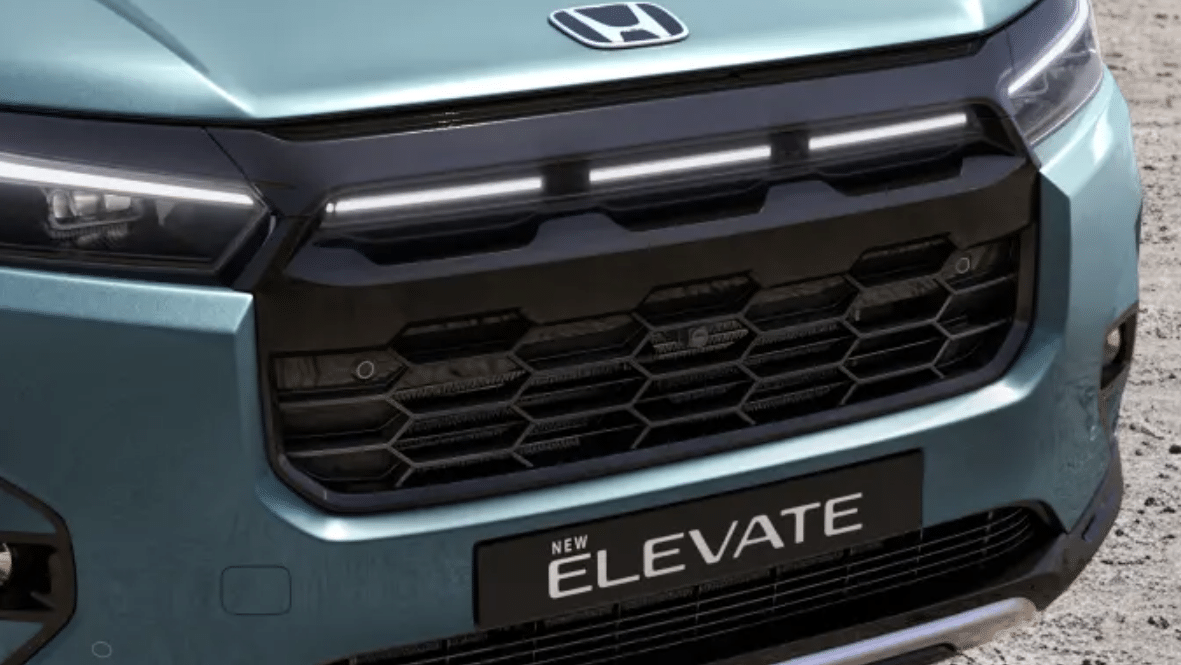
The biggest changes are at the front. The facelift gets a revised honeycomb grille with a gloss-black finish, a segmented LED light strip and updated styling around the headlamps. The Honda badge has also been repositioned onto the bonnet, while the revised fog-lamp surrounds feature a cleaner, body-coloured treatment.
The side profile remains familiar, but gloss-black body cladding and darker-finished 17-inch alloy wheels add a sportier touch. At the rear, a new LED light bar connects the tail-lamps, giving the tailgate a wider and more contemporary appearance.
Honda has also introduced a new Nordic Forest Pearl exterior colour.
These are evolutionary rather than dramatic changes. The Elevate still looks like the same practical SUV, but the updated lighting signatures and darker detailing help it appear more in step with newer rivals.
Interior: The Upgrade Buyers Were Waiting For
The cabin is where the facelift makes a more noticeable difference.
The outgoing Elevate’s interior was functional and spacious, but some buyers felt it lacked the premium ambience increasingly offered by competitors. Honda has responded with a new ivory-and-black upholstery theme, leatherette padding and stitching on the dashboard, and revised roof-liner material.
The result is a lighter, more welcoming cabin that feels more premium without abandoning the familiar dashboard layout.
The 10.25-inch touchscreen infotainment system continues, along with wireless smartphone connectivity and a semi-digital instrument cluster. A single-pane sunroof and wireless phone charger remain part of the equipment package.
The bigger news is the addition of powered front seats, ambient lighting and a PM2.5 air purifier on applicable variants. These upgrades improve the everyday experience, particularly for owners who spend long hours commuting or regularly travel with family.
However, the infotainment software still feels relatively basic compared with some rivals, and the cabin misses features such as a panoramic sunroof, powered tailgate and dual-zone automatic climate control.
Honda has improved the experience, but it has not transformed the Elevate into the most technology-heavy SUV in its class.
Rear-Seat Ventilation Is a Major Highlight
One of the most interesting additions is ventilated rear seats, available on the top-spec ZX+ variant. Honda claims this as a segment-first feature.
In India’s hot weather, rear-seat ventilation could be particularly useful for families who frequently travel with passengers in the back. The facelift also adds ventilated front seats, making the cabin more comfortable during summer commutes.
There is a caveat, though. The road test found that the ventilation takes some time to cool the seats effectively. Even so, having the option is a welcome step forward for a model that previously faced criticism for its equipment list.
The Elevate continues to offer generous storage spaces and a 458-litre boot. Its 2,650mm wheelbase also helps provide a practical cabin, while 220mm of ground clearance remains useful on uneven roads and over taller speed breakers.
For buyers who value space and usability over a flashy interior, these fundamentals continue to be among the SUV’s strongest points.
More Safety and Parking Assistance
Honda has also addressed some of the Elevate’s earlier equipment gaps.
The facelift adds a 360-degree camera and front parking sensors, making manoeuvring in tight spaces easier. The 360-degree camera is a useful addition, although the road test noted that the display is relatively small and the available camera angles could be better.
The existing LaneWatch camera remains, but it continues to cover only the left side of the vehicle.
On CVT-equipped variants, the updates include an electronic parking brake with auto hold, rear disc brakes and a low-speed follow function for adaptive cruise control. The latter is particularly useful in slow-moving traffic, where repeatedly accelerating and braking can become tiring.
The SUV continues to offer six airbags, electronic stability control, traction control and camera-based advanced driver-assistance systems, including automatic emergency braking and lane-keeping assistance.
The additions improve everyday convenience, but buyers should compare variant-wise equipment carefully because not every feature is available across the entire range.
Engine and Driving Experience: A Familiar Honda Strength
Under the bonnet, the Elevate facelift retains the 1.5-litre, four-cylinder, naturally aspirated i-VTEC petrol engine. It produces 121hp and 145Nm of torque.
Transmission options remain a six-speed manual and a CVT automatic. The engine is now compliant with WLTP emissions requirements and remains compatible with E20 petrol.
There is no diesel, turbo-petrol, CNG or hybrid option. That is a limitation when rivals offer a wider selection of powertrains to suit different driving needs and budgets.
However, the engine itself remains one of the Elevate’s strengths. Its throttle response is immediate, and it builds power smoothly as the revs rise. Drivers who enjoy a naturally aspirated engine’s progressive character should appreciate its responsiveness.
The CVT is well suited to daily commuting, offering smooth operation without conventional gear changes. Paddle shifters provide additional control, although pushing hard on the accelerator brings out the familiar CVT effect, with the engine holding high revs for extended periods.
Honda has also worked on improving cabin insulation. The facelift feels quieter than the outgoing model, but road and wind noise remain noticeable at highway speeds. This is one area where further improvement would have made a meaningful difference to the overall premium experience.
Ride and Handling: Still a Practical All-Rounder
The Elevate continues to deliver a well-balanced driving experience. Its steering is light at low speeds, which helps when negotiating crowded streets and parking in tight spaces. It gains weight progressively as speed increases, giving the driver reassuring feedback.
Body roll is well controlled for a tall SUV, making the vehicle predictable around bends. Braking performance also remains strong, with a progressive pedal feel.
These characteristics make the Elevate an easy SUV to live with. It is not trying to be a sporty turbo-petrol crossover, but it offers the kind of predictable road manners many family buyers value.
Its high ground clearance and practical proportions are also helpful on Indian roads, where uneven surfaces and tall speed breakers are part of everyday driving.
Price and Competition: The Challenge Gets Tougher
The 2026 Honda Elevate facelift is priced from ₹11.80 lakh to ₹18.40 lakh (ex-showroom), according to the published launch and review price range. Buyers should confirm the latest variant-wise price with Honda, as pricing and offers can change.
It competes with the Hyundai Creta, Kia Seltos, Maruti Suzuki Grand Vitara, Toyota Urban Cruiser Hyryder, Volkswagen Taigun, Skoda Kushaq and newer challengers such as the Tata Sierra and Renault Duster.
The rivals offer different strengths. Some provide turbo-petrol engines, others offer hybrid or diesel options, and several have feature lists that include equipment missing from the Elevate.
Honda’s response is a more balanced package built around practicality, a responsive petrol engine, a spacious boot and the convenience upgrades introduced with the facelift.
The absence of alternative powertrains remains its biggest limitation. Buyers who prioritise fuel-saving hybrid technology or stronger turbo-petrol performance may find more suitable options elsewhere.
AutoVerse Take: A Better Elevate, but Not a Complete Reinvention
The Honda Elevate facelift is a sensible and welcome update. The revised exterior makes the SUV look fresher, the cabin feels more premium, and features such as ventilated rear seats, a 360-degree camera and an electronic parking brake make it better equipped for everyday use.
Its core strengths remain intact: a responsive naturally aspirated engine, predictable handling, generous ground clearance and a practical 458-litre boot.
But the facelift does not address everything. The single-engine strategy limits its appeal, the infotainment system could be more sophisticated, and highway noise remains an area for improvement. Some desirable features offered by rivals are also missing.
For buyers who want a straightforward petrol SUV with family-friendly practicality and a familiar Honda driving experience, the updated Elevate deserves a place on the shortlist. Those seeking a diesel, hybrid or turbo-petrol alternative should compare the competition before making a decision.
The verdict: The 2026 Honda Elevate facelift is a more rounded SUV than before. It may not lead the segment in technology or powertrain choice, but it has become a stronger contender for buyers who value comfort, usability and a well-sorted driving experience over a long list of headline-grabbing features.
Know more about Honda Elevate.