
India’s automobile industry is evolving at an unprecedented pace. Consumer preferences are shifting from traditional performance metrics to technology, safety, sustainability, and connected mobility. Automakers are investing heavily in electric vehicles, artificial intelligence, software-driven platforms, and next-generation safety systems to meet changing expectations.
As 2026 unfolds, several automotive trends are expected to redefine how Indians buy, drive, and experience cars. Here are the top 10 car trends that are likely to dominate the Indian automotive market in 2026.
1. Electric SUVs Will Lead the EV Revolution
Electric SUVs are rapidly becoming the preferred choice among Indian buyers. Better driving range, improved charging infrastructure, and attractive features are driving demand across multiple price segments.
Manufacturers are expanding their EV portfolios with compact, midsize, and premium electric SUVs, making electric mobility more accessible than ever.
2. AI-Powered Smart Cars Will Become Mainstream
Artificial Intelligence is transforming modern vehicles into intelligent mobility platforms.
AI-powered systems can:
- Understand voice commands
- Learn driver preferences
- Recommend navigation routes
- Predict maintenance requirements
- Optimize battery performance
Future cars will increasingly behave like connected smart devices rather than conventional automobiles.
3. Hybrid Vehicles Will Gain Popularity
Hybrid technology is emerging as a practical bridge between petrol vehicles and fully electric cars.
Strong hybrid systems offer:
- Better fuel efficiency
- Lower emissions
- Reduced running costs
- No charging dependency
As fuel prices remain high, hybrids are expected to attract more Indian buyers looking for economical mobility.
4. Software-Defined Vehicles Will Transform Ownership
Modern cars are increasingly becoming software-defined vehicles where software controls everything from infotainment to performance optimization.
Features such as:
- Over-the-Air (OTA) updates
- Remote diagnostics
- Feature upgrades
- Battery optimization
- Connected services
will allow vehicles to improve continuously without visiting a service center.
5. Connected Car Technology Will Become Standard
Smartphone integration and cloud connectivity are becoming essential features in new vehicles.
Connected cars now offer:
- Remote lock/unlock
- Vehicle tracking
- Geo-fencing
- Climate control
- Live vehicle diagnostics
- Emergency assistance
- Remote charging management for EVs
Digital connectivity is becoming a major buying factor for younger customers.
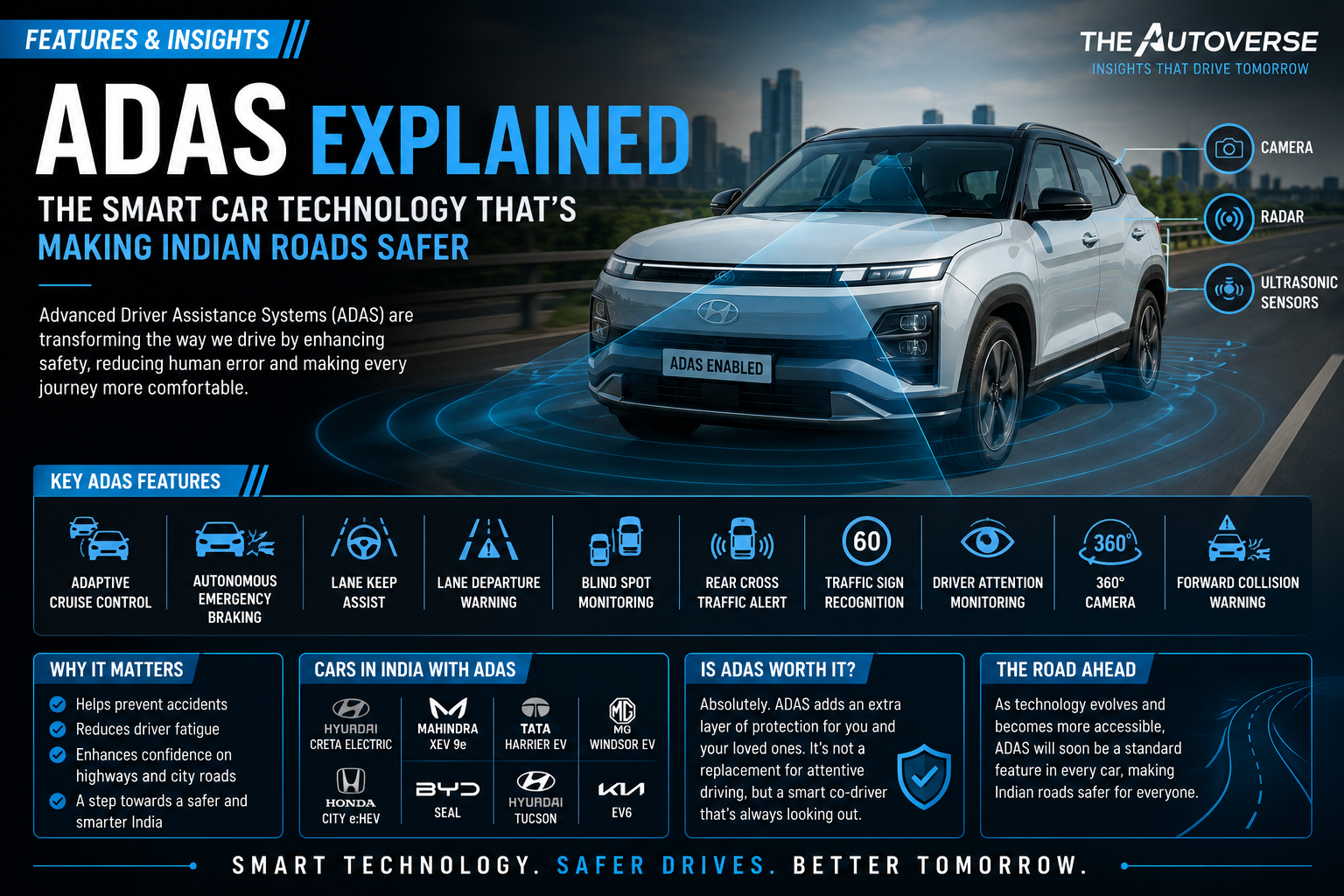
6. ADAS Safety Features Will Expand Across Segments
Advanced Driver Assistance Systems (ADAS) are no longer limited to luxury vehicles.
More affordable cars are now offering:
- Adaptive Cruise Control
- Lane Keeping Assist
- Blind Spot Monitoring
- Automatic Emergency Braking
- Forward Collision Warning
- Driver Attention Monitoring
These intelligent systems improve safety and reduce driver fatigue.
7. Larger Screens and Digital Cockpits Will Dominate Interiors
Automotive interiors are becoming increasingly digital.
New vehicles feature:
- Large infotainment displays
- Fully digital instrument clusters
- Wireless smartphone connectivity
- Voice assistants
- Premium ambient lighting
- Multi-screen dashboard layouts
Digital cabins are expected to become a standard feature across most segments.
8. Fast EV Charging Infrastructure Will Expand Rapidly
India’s charging ecosystem continues to grow with new stations opening across cities and highways.
The expansion of:
- DC Fast Chargers
- Ultra-fast charging hubs
- Home charging solutions
- Smart charging networks
will significantly improve the EV ownership experience.
9. Safety Ratings Will Influence Buying Decisions
Indian buyers are increasingly prioritizing safety while purchasing new vehicles.
Manufacturers are responding with:
- Six airbags
- Electronic Stability Control
- 360-degree cameras
- High-strength body structures
- Five-star crash safety targets
Safety is becoming a major differentiator in the automotive market.
10. Sustainable Mobility Will Shape Future Car Design
Environmental concerns are encouraging manufacturers to adopt sustainable production methods.
Future vehicles may increasingly feature:
- Recycled interior materials
- Eco-friendly manufacturing
- Energy-efficient powertrains
- Lightweight construction
- Lower carbon emissions
Sustainability is expected to become an integral part of automotive innovation.
Why These Trends Matter for Indian Buyers
The Indian automobile market is entering a technology-driven era where software, connectivity, electrification, and intelligent safety systems are becoming as important as engine performance and styling.
Consumers purchasing cars in 2026 are likely to prioritize:
- Advanced technology
- Lower running costs
- Better safety
- Smart connectivity
- Sustainable mobility
- Long-term ownership value
The industry is shifting from mechanical engineering to digital innovation.
AutoVerse Verdict
The future of Indian mobility is smarter, cleaner, and more connected than ever before. Electric vehicles, hybrid technology, AI-powered systems, software-defined platforms, and advanced safety technologies are rapidly reshaping the automotive landscape.
As competition intensifies, buyers can expect more feature-rich, efficient, and intelligent vehicles across every price segment. For anyone planning to buy a new car, staying informed about these trends will be key to making the right choice in 2026 and beyond.
Key Highlights
✅ Electric SUVs are expected to dominate India’s EV market.
✅ AI and connected technologies are making cars smarter.
✅ Hybrid vehicles are gaining popularity for fuel efficiency.
✅ ADAS and software-defined vehicles are reshaping driving experiences.
✅ Smart mobility and sustainability will define the future of India’s automobile industry.